Plagiarism is presenting someone else’s words or ideas as your own without credit. Collusion is working with others on an assessment meant to be your own, then submitting the shared work as individual effort. Both are academic misconduct, but collusion is about unauthorised collaboration, not copying a source, and it often catches students who thought they were just helping a friend.
These two get lumped together because both end in the same place: work that is not genuinely your own, handed in as if it were. But they happen in different ways, and understanding the difference is how you avoid sliding into collusion by accident while trying to be a good coursemate.
What counts as plagiarism?
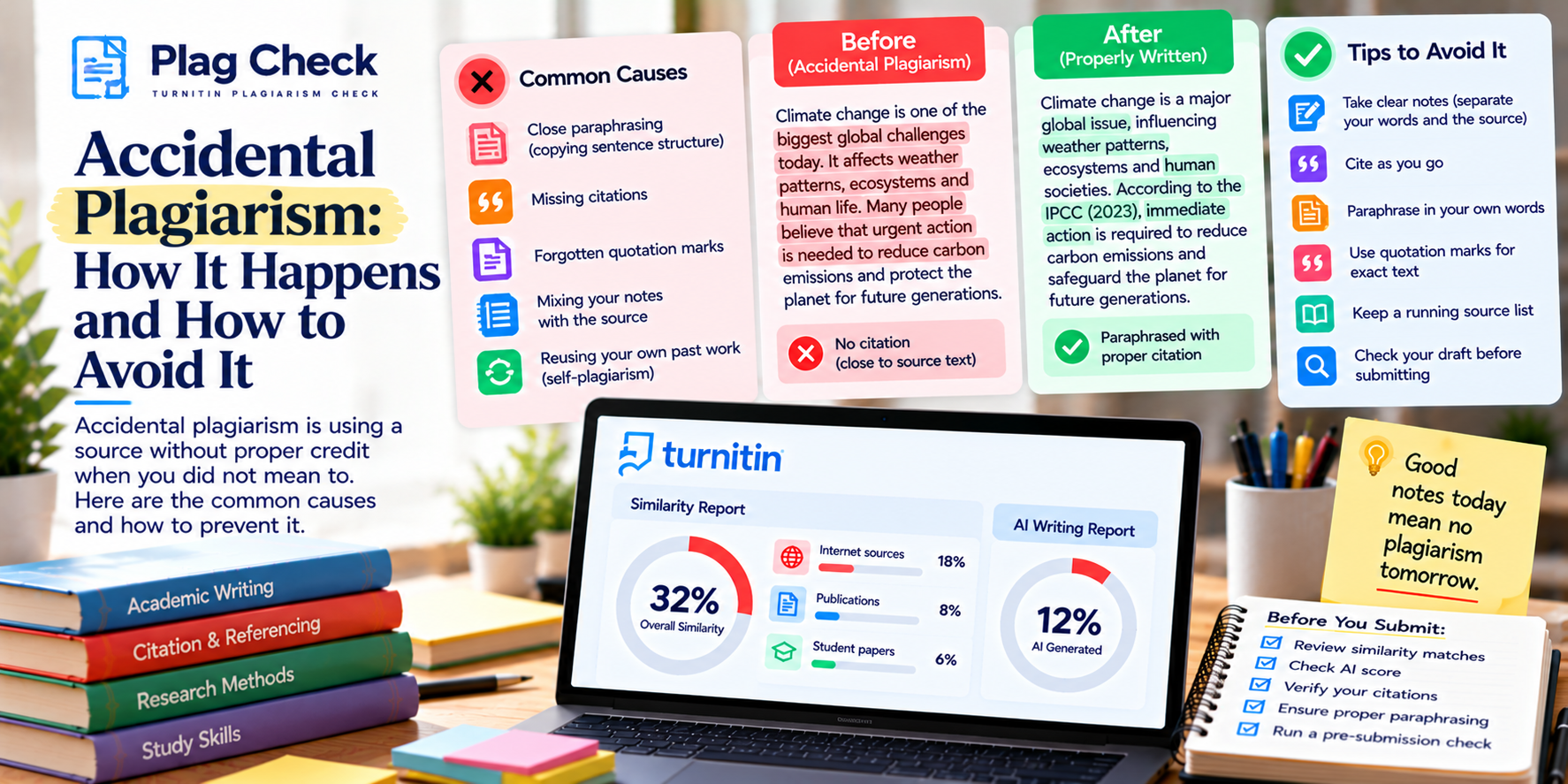
Plagiarism is about sources. It is using a book, article, website, dataset or any other source without properly crediting it, whether you copied it word for word or reused its ideas. It covers direct copying, poor paraphrasing, and reusing your own past work, and we break the categories down in the types of plagiarism and how Turnitin flags each. The common thread is a missing acknowledgement: the words or ideas came from somewhere, and you did not say where.
What counts as collusion?
Collusion is about people, not sources. It is unauthorised collaboration on a piece of work that was meant to be done individually, followed by each person submitting it as their own. It takes several everyday shapes:
- Two students writing an essay together and submitting near-identical versions separately.
- One person shares their finished draft so another can copy or closely follow it.
- A study group dividing an individual assignment between them and swapping answers.
- Letting someone copy your work, which usually makes both students responsible, not just the copier.
The key word is unauthorised. The collaboration your tutor asked for is not collusion. The problem is collaborating on work that was supposed to show what each of you can do on your own.
How are plagiarism and collusion different?
The simplest way to hold the difference is this: plagiarism is about where the material came from, collusion is about who you worked with. You can plagiarise completely alone, by copying a website. You can collude without touching an outside source at all, by co-writing an essay with a classmate. One is a sourcing failure, the other is a collaboration boundary crossed. Many integrity policies list them as separate offences for exactly that reason.
How does Turnitin catch collusion?
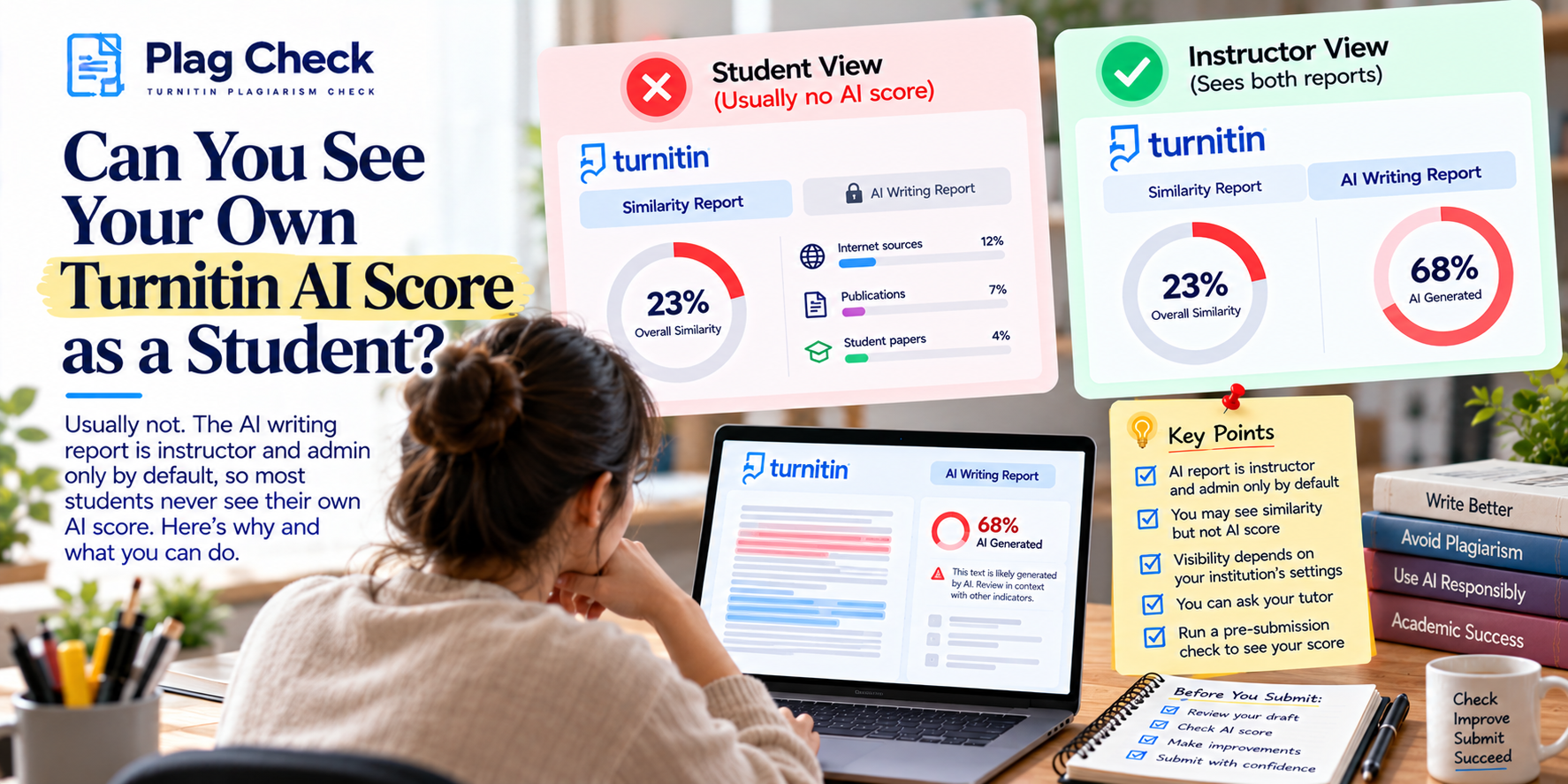
Turnitin does not have a “collusion button”. What it does is match text, including against other students’ papers stored in its repository, which we explain in what Turnitin checks your work against. So when two students submit very similar work, each can match the other, and that overlap shows up. The system flags the similarity. A person then decides whether it is collusion, drawing on context such as whether the assignment was individual and how the two papers line up. As with plagiarism, the report is the starting point, not the verdict.
Where is the line when you are helping a friend?
This is where good intentions go wrong. Helping is normal and usually encouraged. Explaining a concept, pointing someone to a reading, talking through how to structure an argument, or reading a draft and giving feedback are all fine on most courses. The line is crossed when you share your actual words for them to use, hand over your draft to be copied or closely followed, or produce the answer together. A useful test: are you helping them do their own work, or doing part of it for them? The first is support, the second drifts into collusion.
What about group work?
Group assignments are a special case, because collaboration is the point. The rule to watch is what you submit and how. If the work is a shared group submission, collaborating fully is expected. If each person submits an individual piece based on group work, that individual piece must be genuinely your own writing, not a shared document with the names swapped. When a brief mixes group and individual parts, read it carefully, because that is exactly where honest students trip up.
What happens if you are found to have colluded?
Collusion is treated as seriously as plagiarism, and it runs through the same academic misconduct process with the same range of outcomes, from a warning or capped mark up to failing a module or worse, as we set out in what happens if you get caught plagiarising at university. A sting that catches people out is that both students usually face the process, so letting a friend copy your work puts you at risk too, not just them.
How do you stay on the right side of it?
- Check whether an assignment is individual or group before you start, and treat the individual as strictly individual.
- Help coursemates by explaining and discussing, not by sharing your words or draft.
- Do not send your finished work to anyone, however much you trust them.
- Write individual submissions from scratch yourself, even after group discussion.
If you are ever unsure whether a form of help is allowed, ask your tutor before you do it. A quick question is far cheaper than a misconduct case.
What about sharing notes, past papers or group chats?
Shared study materials sit in a grey zone, and group chats have made it bigger. Sharing your own lecture notes, pointing people to a past paper the department released, or discussing a topic in a group chat is normally fine. It tips into collusion when the sharing becomes the work itself: posting your finished assignment in the chat, sending answers for an individual task, or a group quietly producing one set of responses that everyone then submits. A large study group all handing in suspiciously similar work is a classic trigger, because Turnitin matches them against each other. The safe principle is that materials which help everyone learn are fine to share, but anything that is your actual submission is not. If a group chat starts swapping answers to an individual assignment, that is the moment to step back, because everyone in it can be drawn into the same case.
Frequently Ask Questions
Is collusion the same as plagiarism?
No. Plagiarism is using a source without credit. Collusion is unauthorised collaboration on individual work. Both are misconduct, but they are separate offences in most policies.
Is letting someone copy my work collusion?
Yes, and it usually makes both students responsible, not just the person who copied. Do not share your finished work.
Can I study with friends without colluding?
Yes. Discussing ideas, explaining concepts and giving feedback is fine. The line is crossed when you share your actual words or draft, or produce the answer together.
How does Turnitin detect collusion?
It matches text, including against other students’ papers, so very similar submissions flag each other. A person then decides whether it is collusion.
Is group work collusion?
Not when collaboration is what the assignment asks for. It becomes a problem only when an individual submission is really shared work with the names changed.