Accidental plagiarism is using someone’s words or ideas without proper credit when you did not mean to, usually through poor note-taking, weak paraphrasing, missing citations or forgotten quotation marks. It still counts as plagiarism, but intent matters when it is reviewed. Good habits and a pre-submission check catch most of it before it becomes a problem.
Most plagiarism cases we hear about are not students trying to cheat. They are careful people who took a messy note, lost track of a source, or paraphrased a little too closely. The good news is that accidental plagiarism is almost entirely preventable once you know where it comes from.
Is accidental plagiarism still plagiarism?
Yes. From the marker’s side, the page either credits its sources properly or it does not, and good intentions are not visible in the text. That said, intent is taken into account when a case is reviewed, and a genuine, first-time accident is usually treated far more leniently than deliberate copying, as we explain in what happens if you get caught plagiarising at university. So accidental plagiarism is a real risk worth preventing, not a minor technicality, but it is also not the end of the world if you can show your working.
How does accidental plagiarism actually happen?
It tends to come from a handful of everyday slips:
- Close paraphrasing, or patchwriting. Changing a few words of a source while keeping its sentence structure. It feels like rewriting, but it still counts as copying.
- Missing citations. Using an idea or fact and forgetting to credit where it came from, often because you read it so long ago it felt like your own.
- Forgotten quotation marks. Pasting an exact sentence into your notes to use later, then losing track of which words were the source’s.
- Mixing your notes with the source. Note-taking that blends your own thoughts and copied phrasing, so you cannot tell them apart weeks later.
- Reusing your own past work. Recycling an old assignment without permission, which can count as self-plagiarism, a trap we cover in self-plagiarism and how Turnitin detects it.
Why does Turnitin flag it?
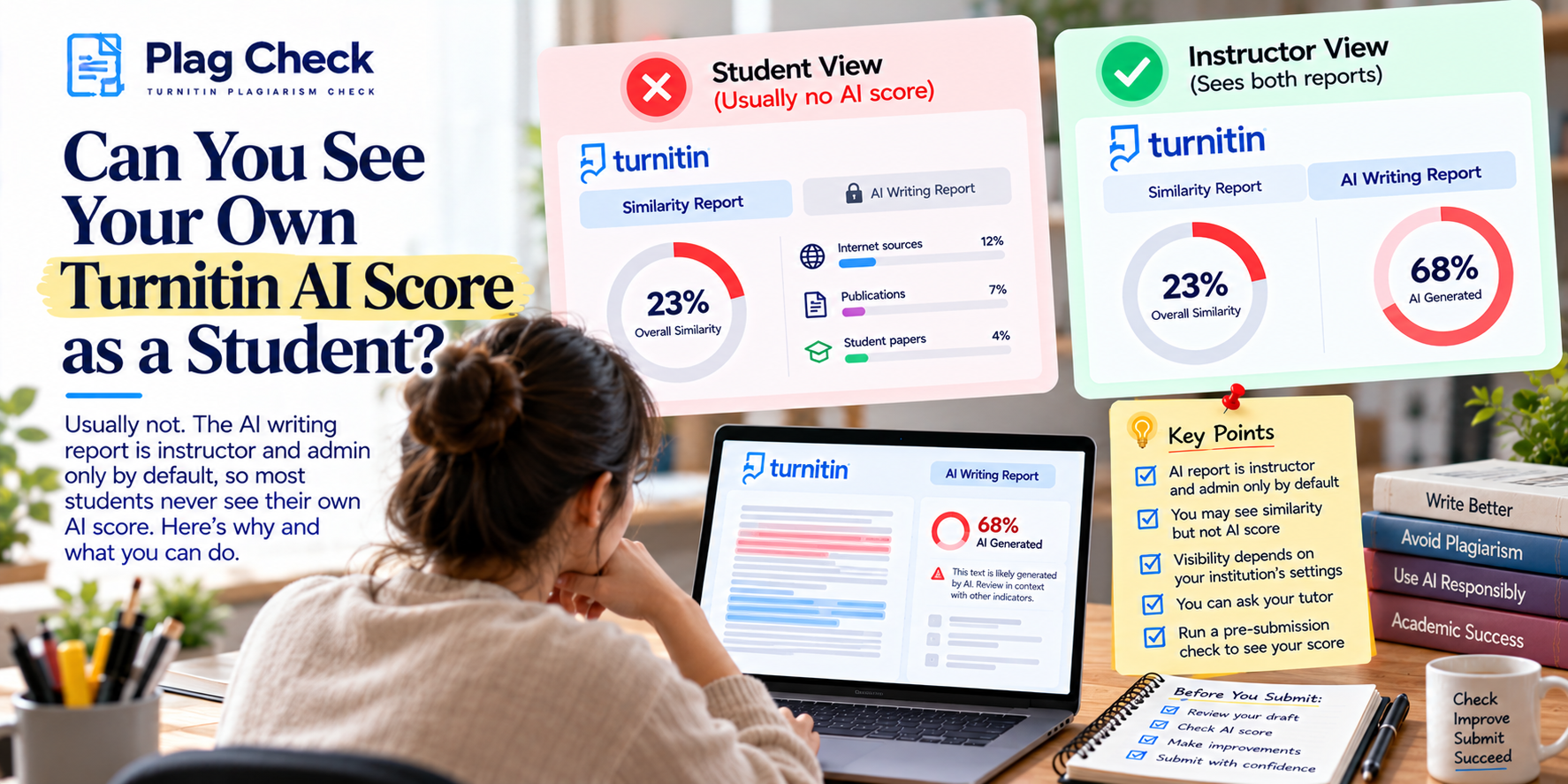
Turnitin matches your text against its database, so a close paraphrase or an uncited quote lines up with the original and shows in your report. This is also why your score can look high even when you did not intend to copy anything, a situation we unpack in why your Turnitin score is high when you did not plagiarise. Remember too that quotes and references legitimately add to the figure, as covered in whether Turnitin checks references and quotes, so a raised score is not automatically a sign of accidental plagiarism.
How do you avoid accidental plagiarism?
A few habits remove most of the risk:
- Take clean notes. Keep the source’s words and your own clearly separate, and mark any exact phrasing with quotation marks straight away.
- Cite as you go. Add the citation the moment you use a source, not at the end when you are tired and racing a deadline.
- Paraphrase properly. Read, understand, close the source, then write the idea in your own words and structure, as we describe in how to paraphrase without plagiarising.
- Quote exactly, and sparingly. Use quotation marks for exact wording, and keep quotes to what genuinely needs them.
- Keep a running source list. Track everything you read so no citation goes missing, and cite it correctly in your required style.
What is the safety net before you submit?
Even careful writers miss things, which is why a check before you submit is the practical backstop. A pre-submission report shows you the passages that match a source, so you can see at a glance where a paraphrase stayed too close or a quotation mark went missing, and fix it while you still can. It turns accidental plagiarism from something you discover after marking into something you catch beforehand.
What do we see in practice?
The pattern is remarkably consistent. The matches that worry honest students are almost always a close paraphrase of one source, a method or definition sentence everyone in the field writes similarly, or a reference list quietly adding a chunk of the score. None of those is a crisis, and all of them are easy to fix once you can see them. The students who get caught out are the ones who never looked before submitting, not the ones who made a mistake.
Does referencing software stop accidental plagiarism?
Reference managers are a genuine help, but they are not a safety net on their own. They keep your sources organised and format citations for you, which removes a lot of busywork and cuts down on missing references. What they cannot do is notice when a paraphrase stayed too close to the source, when a quotation mark went missing, or when you used an idea you never recorded. Those are judgement calls, not formatting. So treat the software as support for a good habit, not a replacement for it. The habit of citing as you write, and checking the draft before you submit, is still what catches the mistakes a reference manager never sees.
What if you spot plagiarism after you have submitted?
If you realise after submitting that you missed a citation or left a paraphrase too close, it is usually better to tell your tutor than to hope nobody notices. Raising it yourself shows integrity, and most markers respond far better to an honest correction than to a problem they find on their own. Whether you can amend the work depends on where you are in the process, so ask early. The ideal, of course, is to catch it before it reaches that point, which is the whole case for checking a draft while you can still fix it quietly.
Frequently Ask Questions
Is accidental plagiarism still plagiarism?
Yes. The text either credits its sources or it does not. But intent is considered when a case is reviewed, and a genuine first-time accident is usually treated far more leniently than deliberate copying.
What is the most common cause of accidental plagiarism?
Close paraphrasing, where you change a few words but keep the source’s structure, and missing citations from messy note-taking.
Can I be penalised for plagiarism I did not mean to commit?
You can, but intent matters. Keeping your drafts and notes, and checking before you submit, is the best protection.
Does a high Turnitin score mean I plagiarised by accident?
Not necessarily. Quotes and references legitimately raise the score. Read the matches before assuming a problem.
How do I stop accidentally plagiarising?
Take clean notes, cite as you go, paraphrase from understanding rather than from the page, quote exactly, and check your draft before submitting.