Usually not. The AI writing report is visible to instructors and administrators by default, so most students never see their own AI score, even when they can see their similarity report. Whether you see it is your institution’s choice. The reliable way to know before submitting is to check a draft yourself.
This catches a lot of students off guard. They assume that if Turnitin scored their AI writing, they can see the number. In most setups, they cannot, and that gap between being judged on a score and never seeing it is worth understanding properly.
Who can see the AI report by default?
Turnitin deliberately keeps the AI writing report away from students by default. The stated reason is that the score is meant to be read with context, not taken as a simple pass or fail, so it goes to the people marking the work first. It helps to know how Turnitin AI detection works to see why context matters so much. Whatever you think of the choice, the practical effect is clear: your tutor may be looking at an AI percentage on your essay that you have no way of seeing.
Why can you see similarity but not AI?
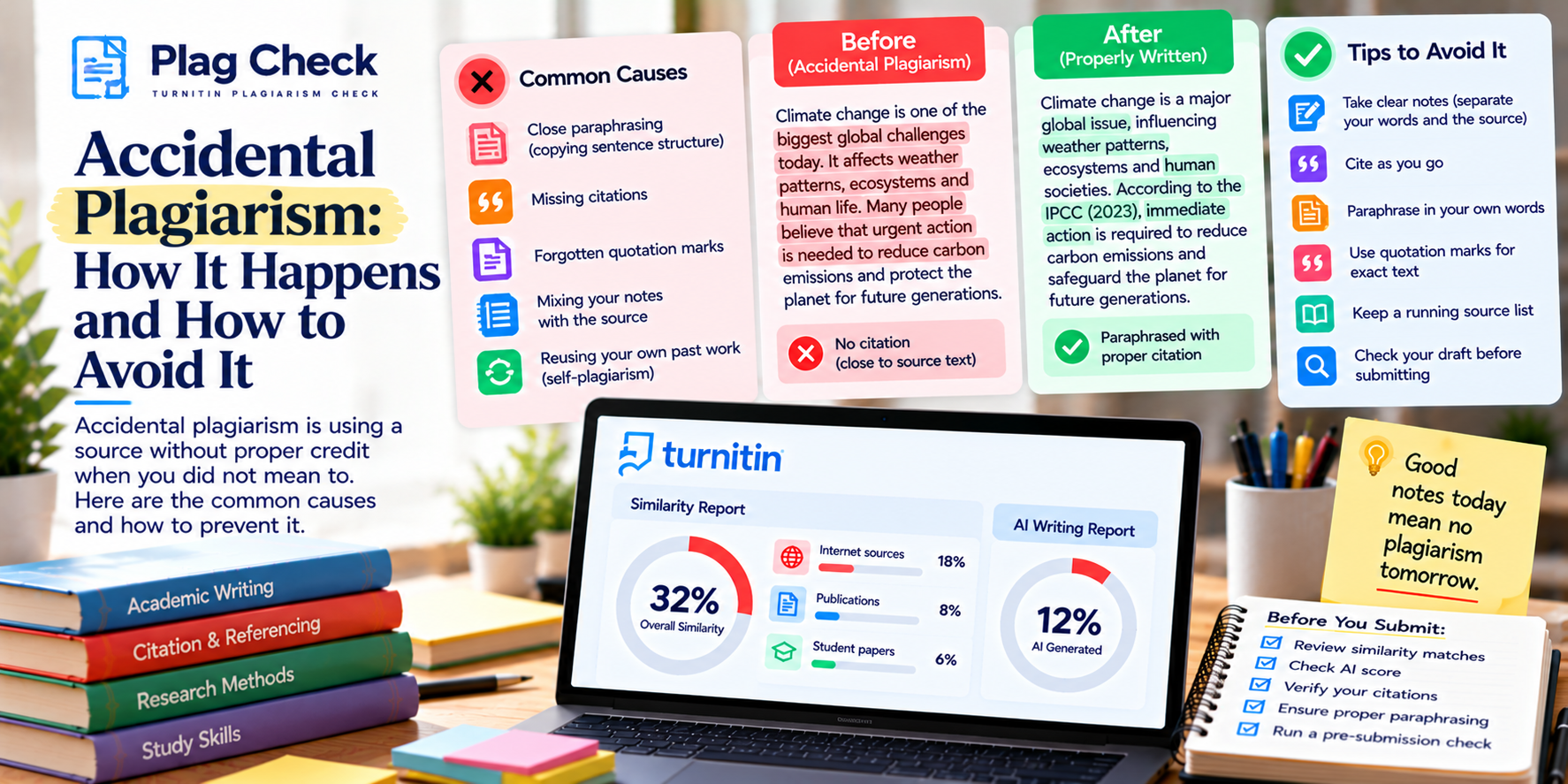
It is easy to confuse the two reports. Many institutions let students see their similarity report, the one with the matching sources and the colour band. The AI writing report is a different thing with its own percentage, and it follows its own visibility setting. So you can be in a situation where you can see your similarity score in full and still have no access whatsoever to your AI score. Seeing one does not mean you can see the other, and the two are generated and governed separately.
What can you do if you cannot see your score?
Being assessed partly on a number you cannot check is genuinely stressful, especially given that detectors produce false positives. It helps to know what AI score is actually acceptable on Turnitin so a figure, if you do learn it, does not panic you. If this matters for an assignment, you have a few reasonable options:
- Ask your tutor. Some will tell you your AI score, or discuss it, especially if you raise a concern early and politely.
- Check your course’s policy. A few institutions do enable student visibility, so it is worth confirming rather than assuming.
- Check a draft yourself. The only way to reliably see an AI figure on your own writing, before submission, is to run your own pre-submission check.
Why keep your own evidence?
Because you often cannot see the score your tutor sees, your own records are your protection. Keep your drafts, version history, notes and research. If an AI score is ever raised with you, being able to show how the work came together matters far more than arguing about a percentage you were never shown, and it is the best defence against a false positive on human writing. This is the simplest safeguard available, and it costs nothing but a little tidiness.
What do students tell us?
The most common message we get is some version of “my tutor mentioned an AI score and I have no idea what it was”. That is the heart of the problem, and it is especially hard for students who cannot submit through an institution at all, which is why we wrote about using Turnitin without a university account. Checking a near-final draft yourself turns an invisible, anxiety-inducing number into something you can see and act on, with time to rewrite anything that reads as machine-generated before it ever reaches your tutor.
Why does my university hide the AI score from me?
It comes down to how the figure is meant to be used. Turnitin and many institutions treat the AI percentage as a starting signal for a human conversation, not as a grade in itself. The worry is that a raw number shown straight to students would cause panic over false positives, or be treated as a target to game. Some universities are also still forming their AI policy and would rather not publish a score they are not yet ready to act on consistently.
The effect is that visibility is a deliberate institutional choice, and it can differ between two courses at the same university. There is no universal setting you can appeal to. If seeing your score matters for a particular assignment, the realistic routes are to ask your tutor early and in writing, or to check a draft yourself before you submit.
Can you ask to see your report formally?
If an informal request does not get you anywhere, it is worth knowing that many institutions will share a report on reasonable request, particularly where a score has been raised as a concern about your work. Policies vary, so ask your tutor or module leader what their process is rather than assuming either a yes or a no. Whatever the answer, checking a draft yourself remains the one route that does not depend on anyone else’s setting.
Frequently Ask Questions
Can students see their Turnitin AI score?
Usually not. The AI writing report is visible to instructors and administrators by default, so most students never see their own AI score.
I can see my similarity score, so why not my AI score?
They are separate reports with separate visibility settings. Being able to see your similarity report does not give you access to the AI report.
Can I ask my tutor to tell me my AI score?
Yes, and it is worth asking politely. Some tutors will share or discuss it, particularly if you raise a genuine concern early.
How can I see my AI score before submitting?
Run your own pre-submission check on a draft. That is the only reliable way to see an AI figure on your writing before your tutor does.
What should I do if I am worried about a false positive?
Keep your drafts, notes and version history so you can show the work is yours, and check a draft in advance so there are no surprises.