It depends on how serious the case looks, whether it seems deliberate, and whether it has happened before. Outcomes range from a warning or capped mark to a zero, a failed module, suspension, or in the worst cases expulsion or a withdrawn degree. Most universities follow a set process, and you usually get a chance to respond before anything is decided.
First, a reassurance, because this question is usually asked in a moment of fear. A high similarity score is not the same as being caught plagiarising, and being flagged by Turnitin does not trigger an automatic penalty. It triggers a human review. Most students who panic over a score have done nothing that will go anywhere. This guide is about the cases that do go further, and how to keep yourself out of them.
Is being flagged the same as being caught?
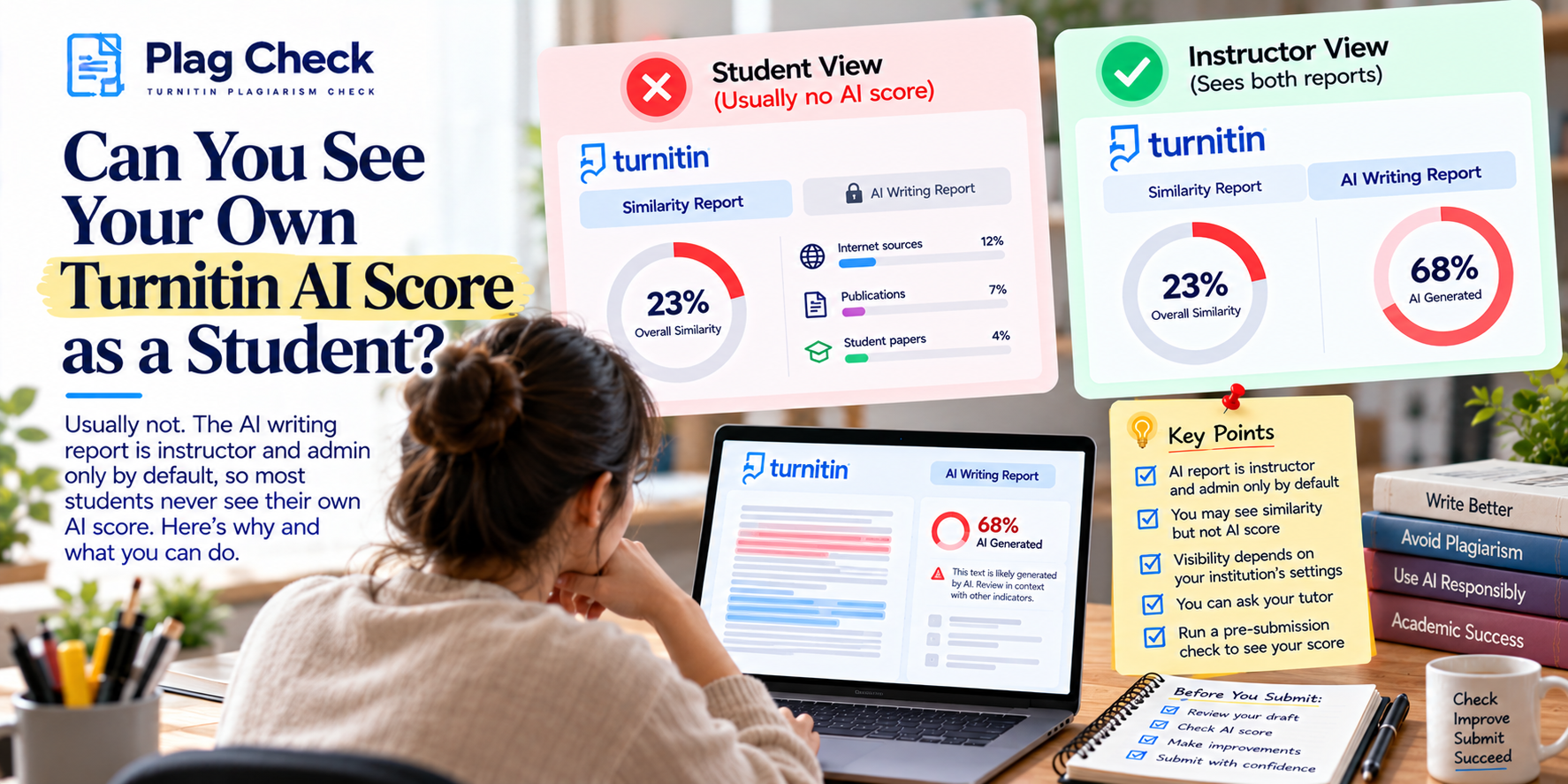
It is worth separating two things that get confused. Turnitin flags matching text or AI-style writing. A person then decides whether that match is a problem. A reference list, a block of correctly cited quotes and standard subject phrasing all push a score up without being plagiarism at all, which is why so many students ask why their Turnitin score is high when they did not plagiarise. Your marker is trained to look past those and at the substance. A scary number on a report is the start of a conversation at most, not a conviction.
What are the penalties, from mild to severe?
Universities scale the outcome to the offence, so the same word, plagiarism, covers everything from a careless citation to buying an essay. It helps to know the different types of plagiarism and how Turnitin flags each, because the type shapes the penalty. The usual ladder looks like this:
- Minor or first-time, and likely accidental: a formal warning, a chance to resubmit, or a mark capped at the pass threshold. Often paired with a note on your record and some academic integrity support, so you understand what went wrong.
- Moderate: a zero for the assignment, or a capped mark across the whole module. Common where the breach is clear but limited and there is no strong sign of intent to deceive.
- Serious or repeated: failing the module outright, having to repeat the year, or a period of suspension. Repeat offences move up this ladder quickly, because a second case is hard to put down to accident.
- Most serious: expulsion, or for research degrees a withdrawn or revoked qualification. These are reserved for deliberate, large-scale or persistent misconduct, such as contract cheating or wholesale copying.
The exact labels, mark caps and thresholds vary from one institution to the next. Your own university’s academic integrity or academic misconduct policy is the document that actually applies to you, and it is usually public on the student intranet. If you are ever in a case, read it early.
How does the misconduct process work?
A typical process moves through clear stages, and knowing them takes some of the fear out of it:
- Flagging. The work is raised as a concern, often by a Turnitin report combined with a marker’s judgement that something is off.
- Review. Minor cases may be handled within the module team. More serious ones are referred to an academic misconduct panel or committee.
- Your response. You are normally told what the concern is and given a chance to explain, in writing or at a short hearing. This is your opportunity, not a formality.
- Decision and penalty. A finding is made and any penalty applied, scaled as above.
- Appeal. There is usually a right to appeal the decision or the penalty, within a set window.
What counts in your favour?
Intent and history carry real weight. A first-time citation slip is treated very differently from reusing a graded paper, which is why self-plagiarism and how Turnitin detects it is worth understanding before you recycle old work. The strongest thing you can bring to a review is evidence that the work is genuinely yours: your drafts, your notes, your reading history, your search trail. Being able to show the piece taking shape over time is hard to argue with. Honesty helps too. When the evidence is clear, owning a mistake tends to go better than denying it.
Why do dissertations carry extra weight?
The stakes rise with the level of the work. A dissertation or thesis is assessed as original research, so plagiarism or undisclosed AI use there is taken more seriously than in a first-year essay, and the consequences can reach a withheld or revoked qualification. If you are at that level, a careful pre-submission check of your full draft is not optional caution, it is basic risk management on the single most important piece of work you will submit.
How do you stay well clear of it?
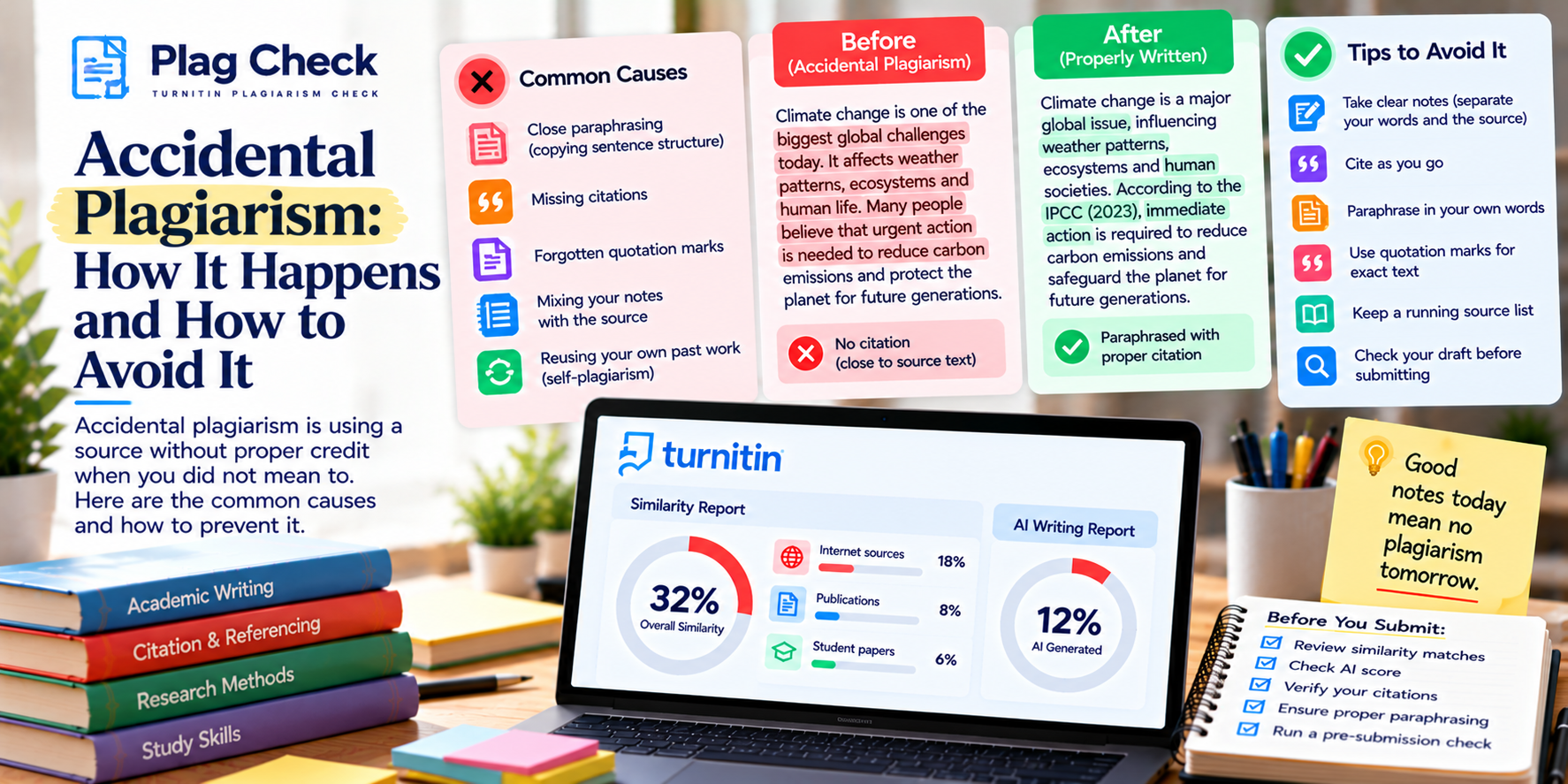
Cite every source you quote, paraphrase, or take an idea or structure from. Paraphrase properly, in your own words and sentence structure, rather than swapping a few words in a copied sentence. Do not reuse your own past submissions without permission. Keep your drafts and notes as you go, so you can always show the work is yours. And check your work before you submit, so you catch unmarked matches and surprise AI flags while you can still fix them.
Does a finding go on your record, and can you appeal?
Most universities record an upheld academic misconduct finding on your internal student file, at least for a period, and a serious finding can be disclosed to professional bodies for regulated courses such as medicine, law or teaching. Minor, first-time cases are often handled locally and may not follow you in the same way. Either way there is normally a right to appeal, within a set window, on grounds such as a procedural error or new evidence. Read your institution’s appeals process at the same time as its misconduct policy, because the deadline to appeal is usually short. If the stakes are high, your students’ union or an academic adviser can help you prepare a calm, evidenced response.
Frequently Ask Questions
Does a high Turnitin score mean I will be penalised?
No. A high score is matching text, not a verdict. A marker reviews what matched before any penalty is considered, and much of a score is usually just quotes and references.
What is the most common penalty for plagiarism?
For a first, minor case it is often a warning, a resubmission or a capped mark. More serious or repeat cases can mean a zero, a failed module, suspension, or worse.
Can you be expelled for plagiarism?
Yes, but expulsion is reserved for the most serious cases, such as deliberate, large-scale or repeated misconduct. Most cases are resolved well below that level.
Will accidental plagiarism still get me in trouble?
It can, but intent is taken into account. A genuine, first-time accident is usually treated far more leniently than deliberate copying.
What should I do if I am accused of plagiarism?
Read your university’s academic misconduct policy, gather your drafts and notes as evidence that the work is yours, respond honestly at the review, and use your right to appeal if you disagree.