All reports powered by Turnitin — the same system thousands of WORLDWIDE universities use to check student work.
Helpful Guides on Plagiarism and Turnitin Reports
Explore easy-to-understand articles covering plagiarism, similarity scores, Turnitin reports, citations, report colours, and other topics to help you better understand your results.
All articles
Showing 10 of 15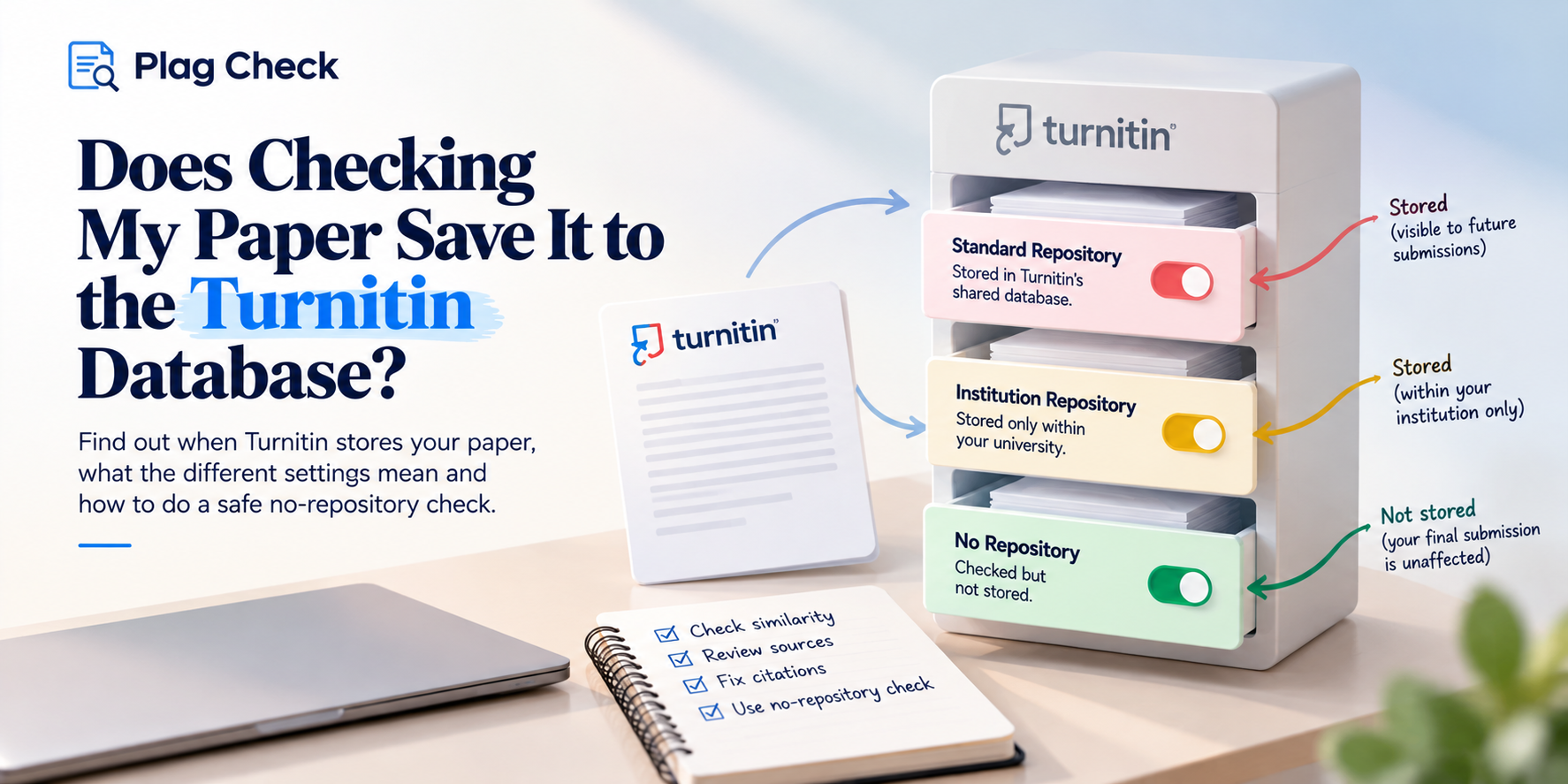
Does Checking My Paper Save It to the Turnitin Database?
Turnitin saves a paper only if the assignment or account is set to store submissions in its student paper repository. If it is stored, a later submission of the same document will match it, often at or near 100%. A no-repository check compares your work with the database without saving it, so your final submission […]
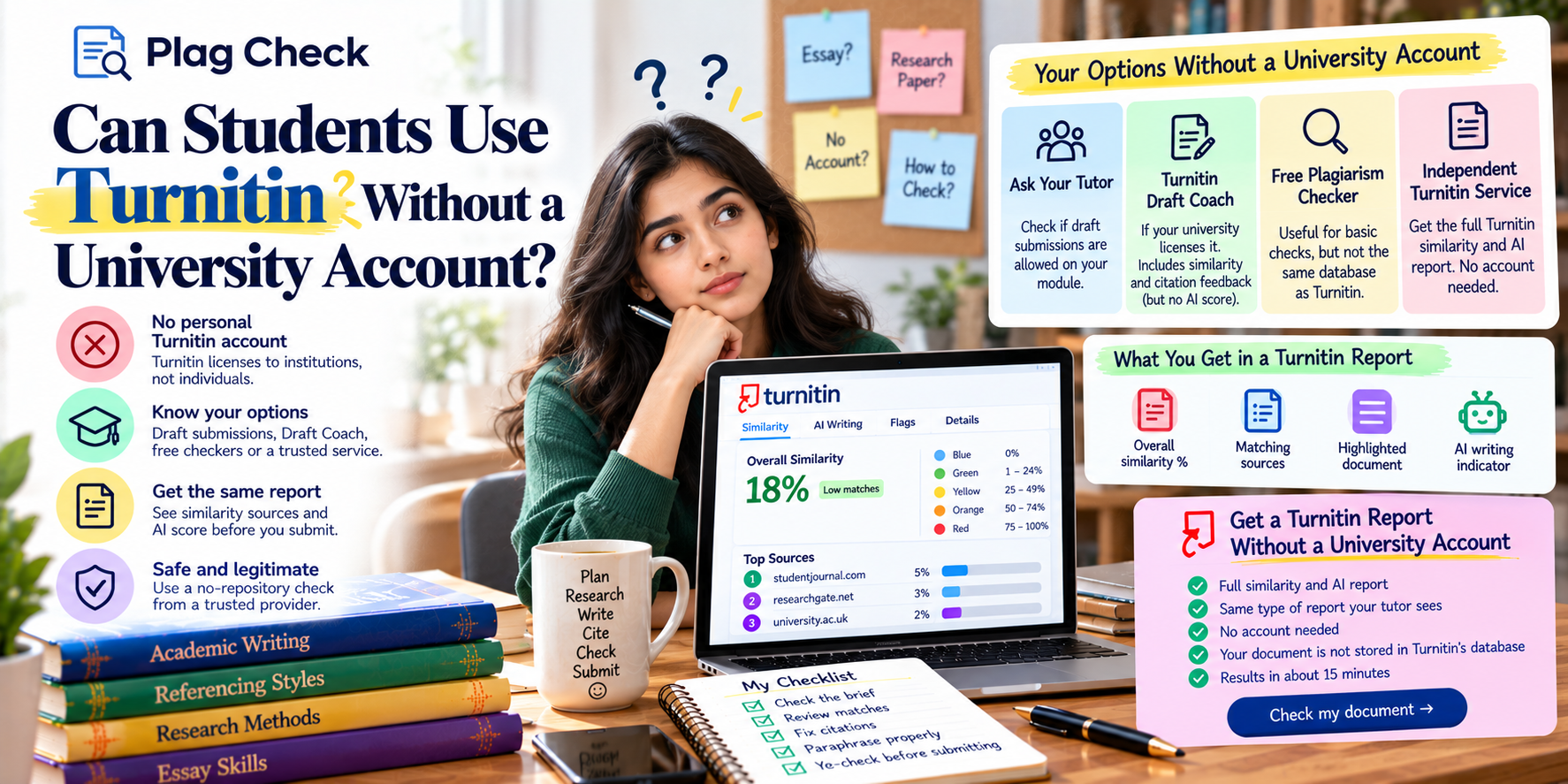
Can Students Use Turnitin Without a University Account?
No, not directly. Turnitin sells licenses to universities, colleges and schools, not to individual students, so there is no personal Turnitin account to buy. Students without access can ask their tutor about draft submissions, use a Turnitin tool, their university licenses, or use an independent service that runs the check and sends the report. Students […]
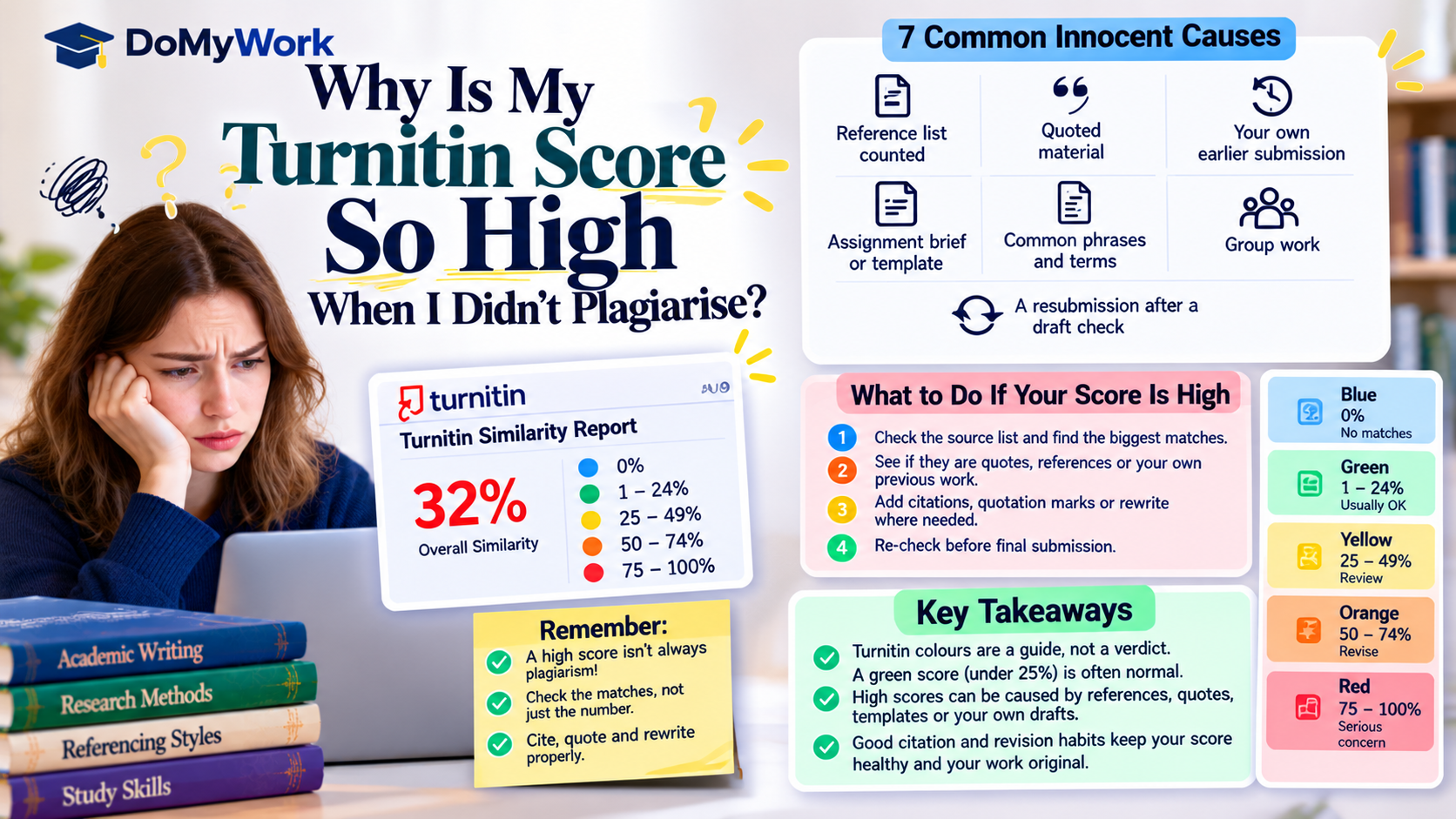
Why Is My Turnitin Score So High When I Didn’t Plagiarise?
A Turnitin score can be high without any plagiarism. The most common causes are a counted reference list, correctly quoted material, an earlier version of your own work stored in Turnitin’s archive, shared templates or assignment questions, and common academic phrases. Read the matches before assuming the worst. Few things are more stressful than a […]
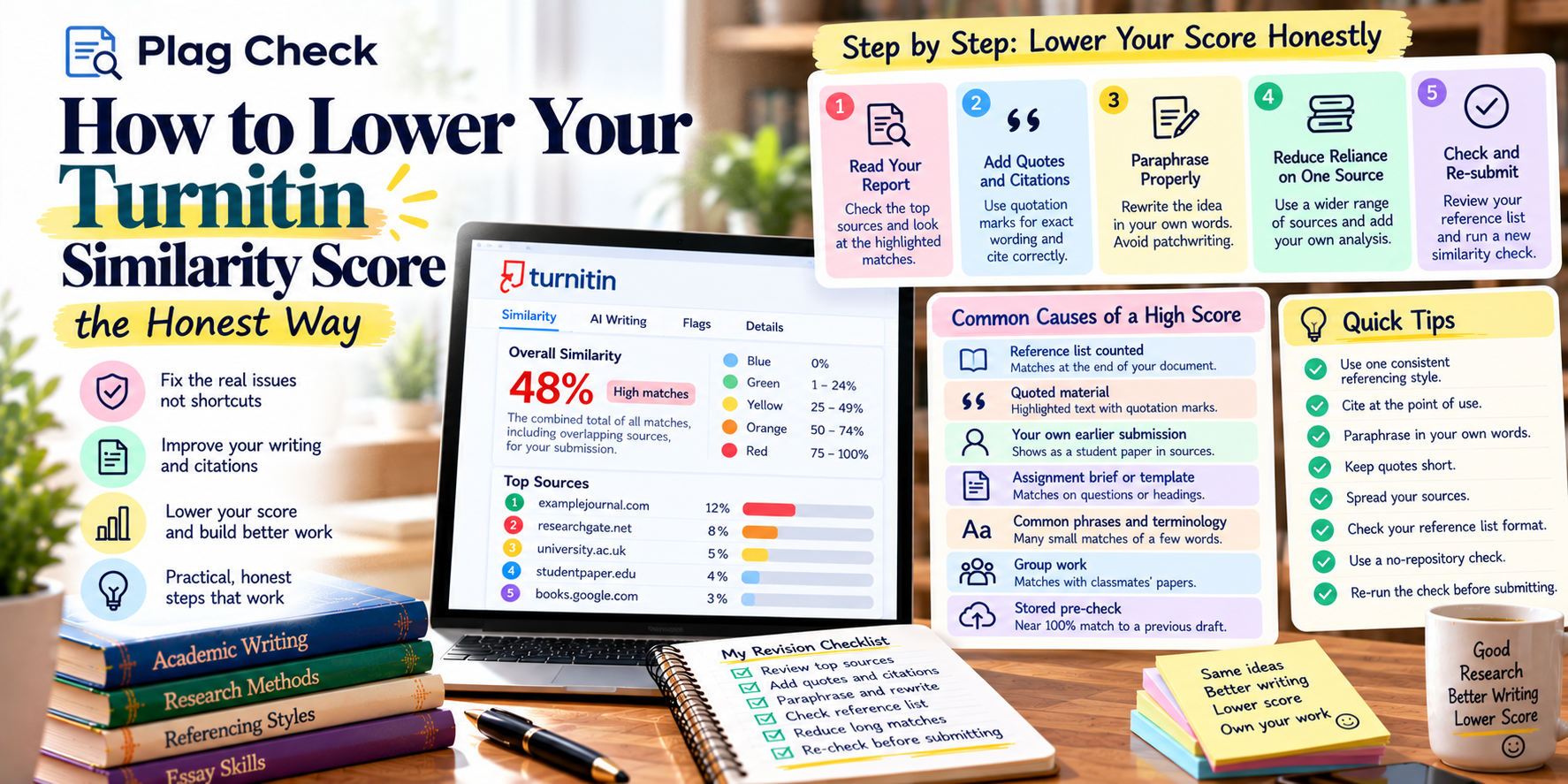
How to Lower Your Turnitin Similarity Score the Honest Way
To lower your Turnitin similarity score honestly, fix the passages behind your largest matches: add quotation marks and citations to exact wording, rewrite close paraphrases in your own words and cite them, reduce reliance on any single source, and check your reference list format. Then re-check before submitting. There is a lot of bad advice […]
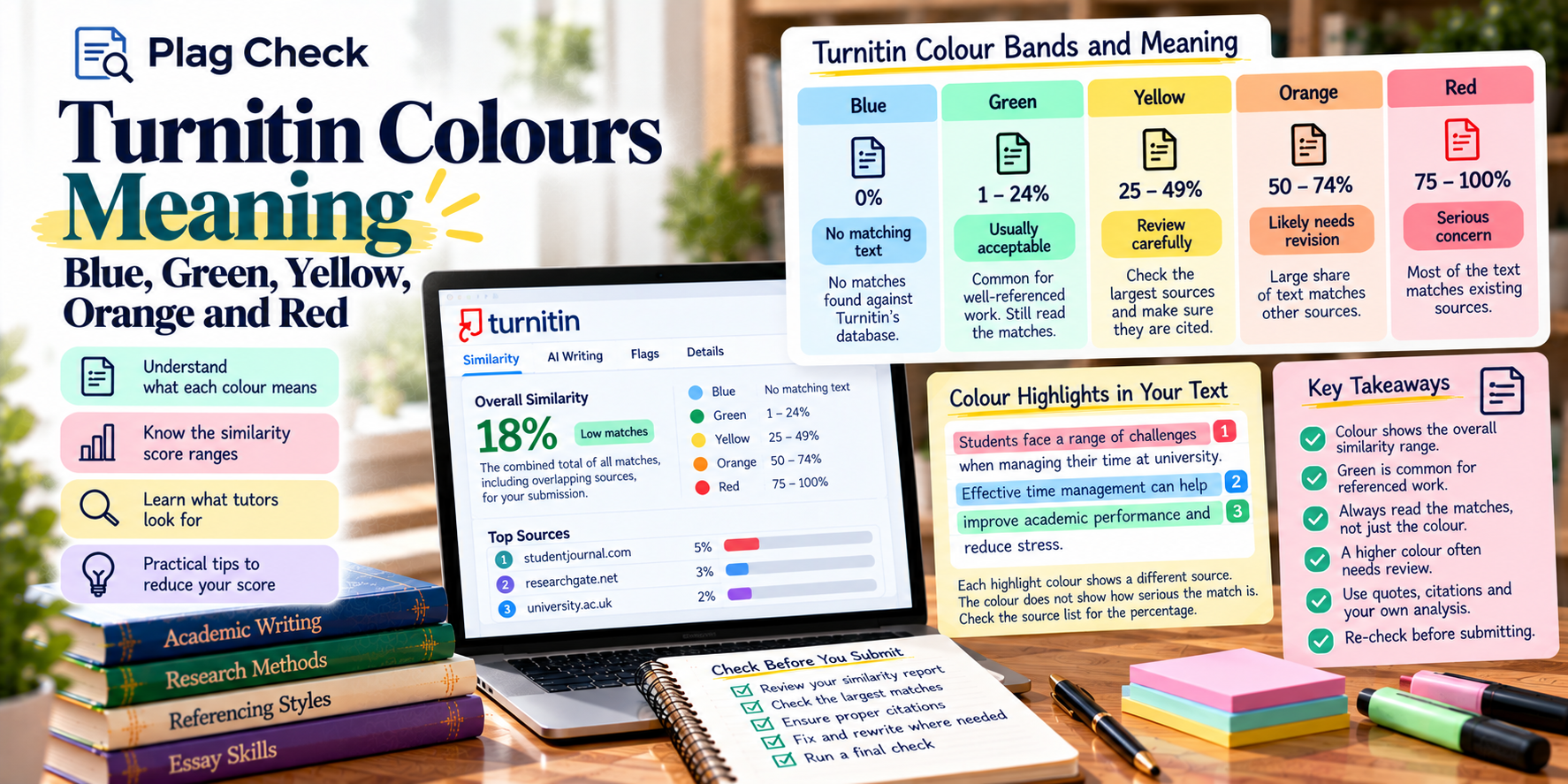
Turnitin Colours Meaning: Blue, Green, Yellow, Orange and Red
Turnitin colours show which band your similarity score falls into. Blue means no matching text, green means one matching word up to 24%, yellow means 25% to 49%, orange means 50% to 74% and red means 75% to 100%. The colour is a quick guide, not a verdict on plagiarism. Seeing a coloured box next […]
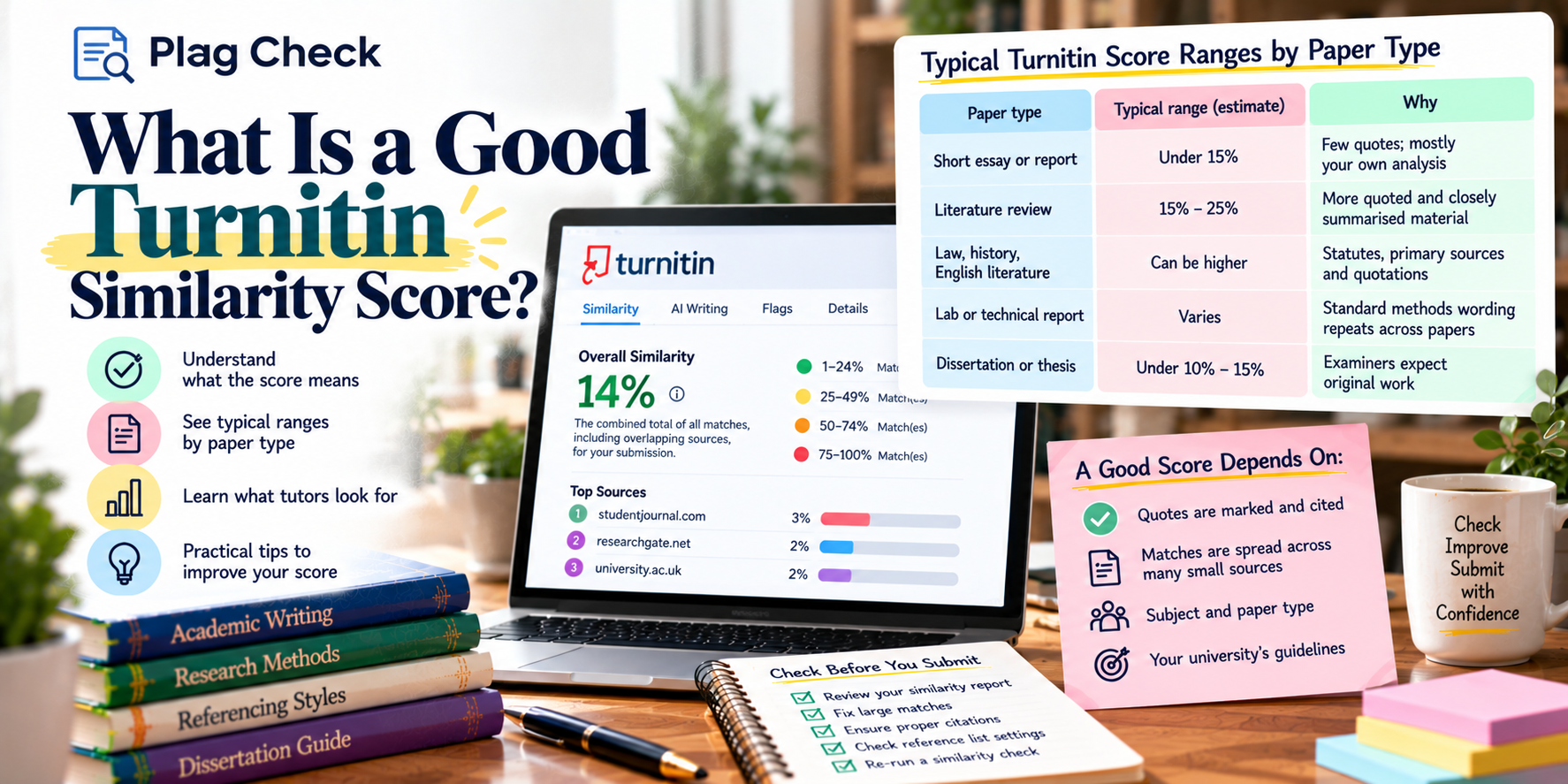
What Is a Good Turnitin Similarity Score?
There is no official good Turnitin score. Turnitin does not set one, and universities rarely publish a fixed limit. As a rough guide, many tutors see well-referenced work in the green band, often under about 15% to 20%, as normal. What matters most is whether the matched text is quoted, cited and spread across many […]
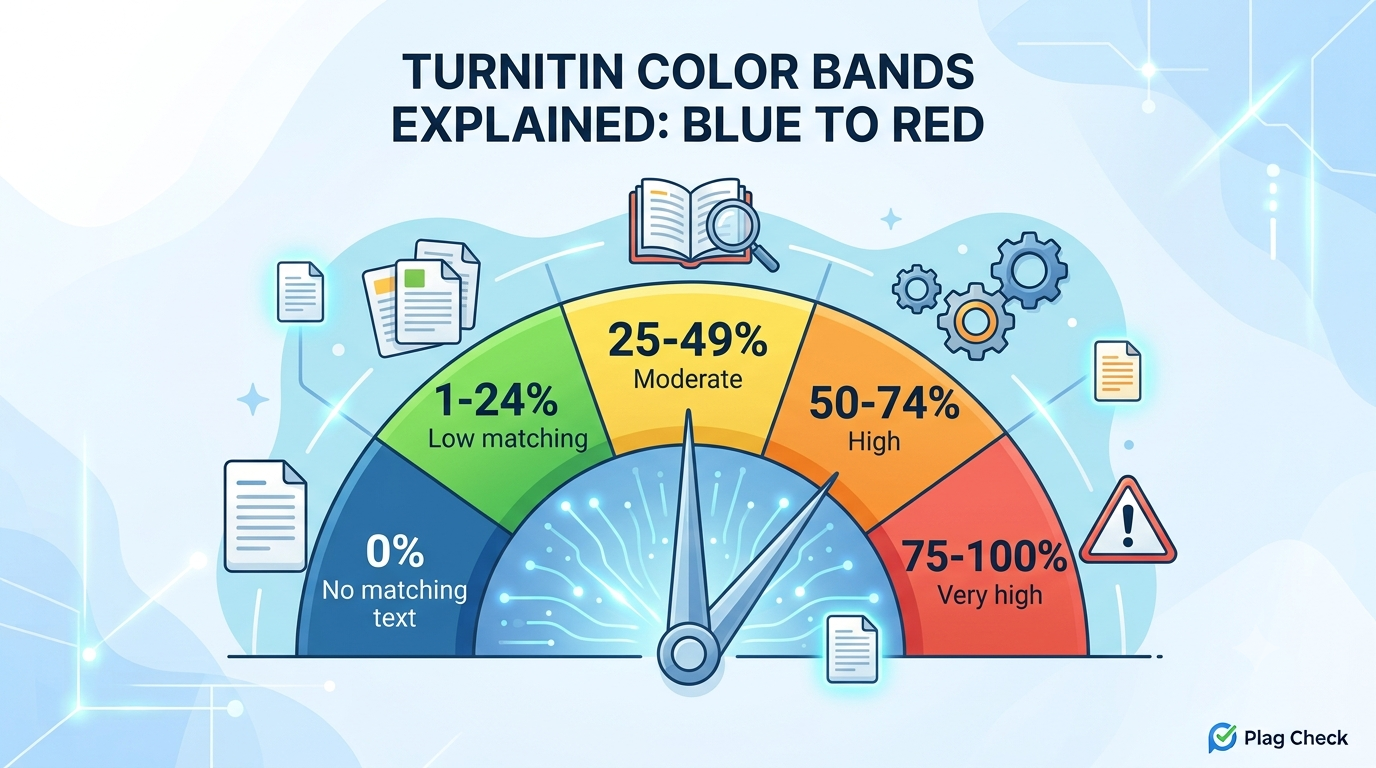
Turnitin Color Bands Explained
Short answer: The color next to your similarity score is a quick signal of how much of your text matched other sources. Blue is no match, green is 1 to 24 percent, yellow is 25 to 49, orange is 50 to 74, and red is 75 to 100. A brighter, warmer color means a higher […]
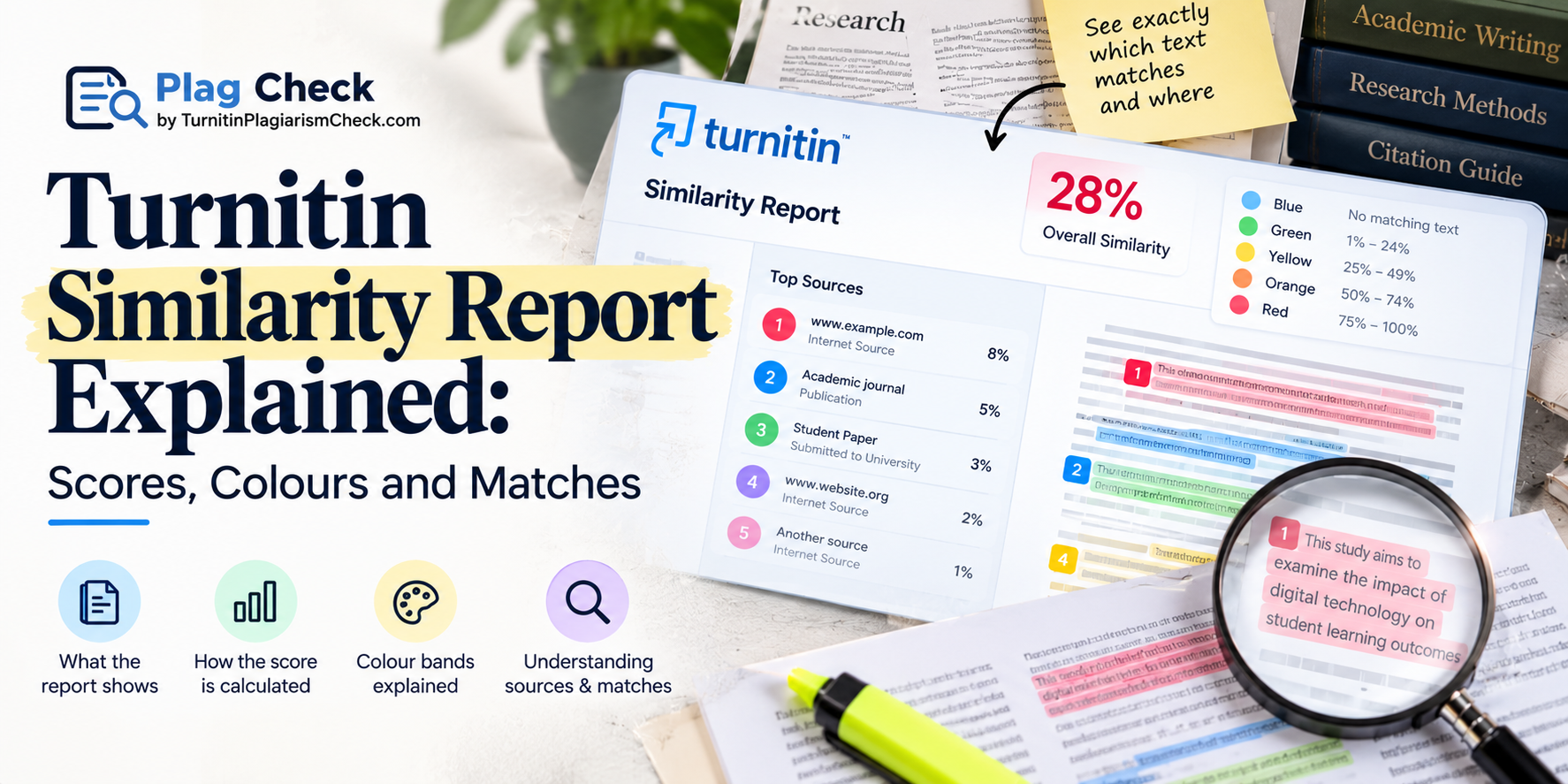
Turnitin Similarity Report Explained: Scores, Colours and Matches
A Turnitin similarity report shows how much of your document matches text in Turnitin’s database of web pages, publications and past student papers. It gives an overall percentage, a colour band, a ranked list of matching sources and your text with each match highlighted. It does not decide whether you plagiarised; your tutor does. The […]
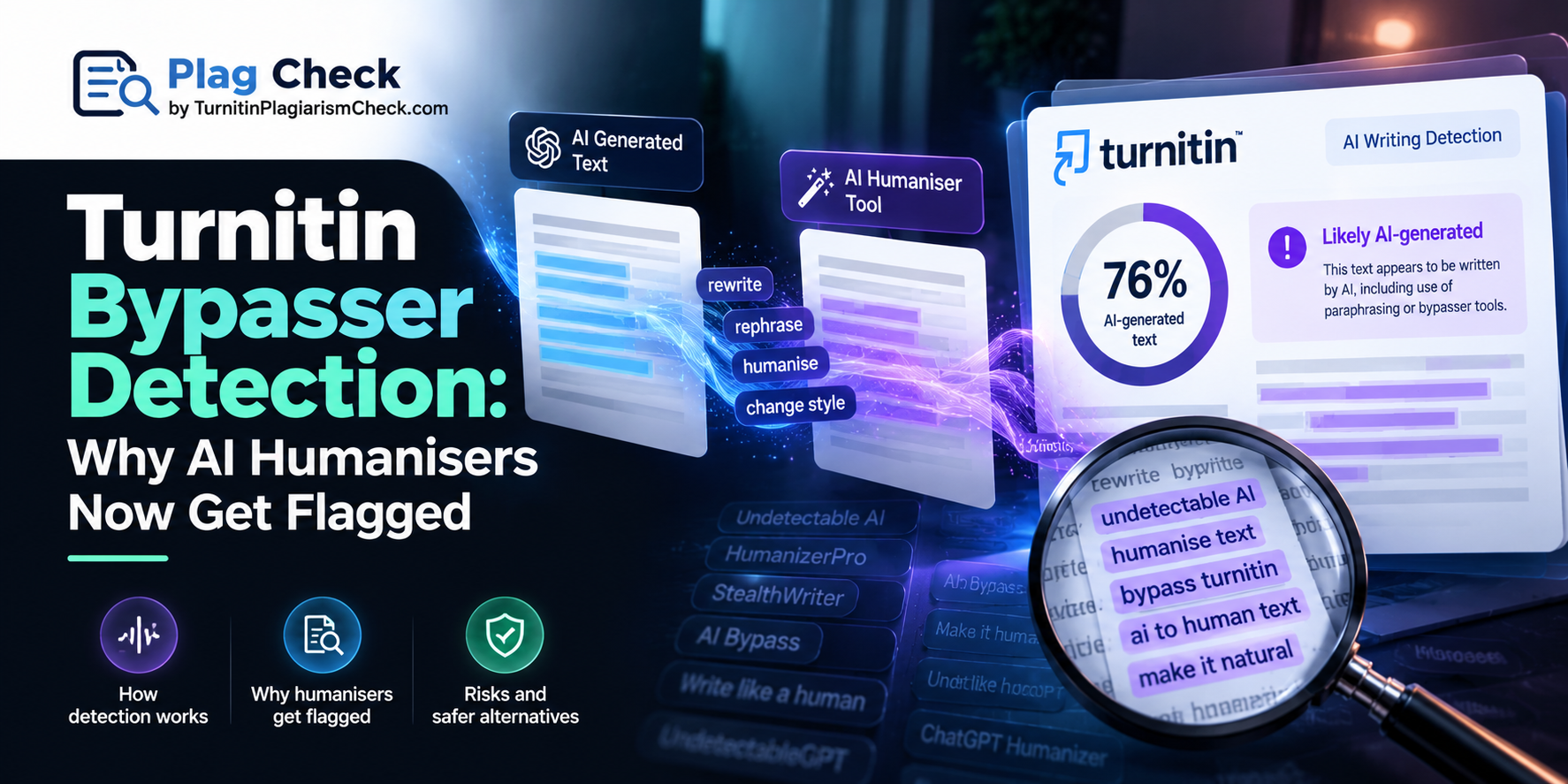
Turnitin Bypasser Detection: Why AI Humanisers Now Get Flagged
Turnitin’s bypasser detection is an update to its AI writing model that looks for AI-generated text which has been altered by so-called humaniser tools. Turnitin launched it on 27 August 2025, improved its AI model again in February 2026, and since August 2026 includes bypassed text in its single AI percentage. Humaniser tools promise to […]
Ready to check your own score?
Upload your document and get a full Turnitin similarity and AI report in about 15 minutes. No account needed.


