The main types of plagiarism are direct copying, mosaic or patchwriting, poor paraphrasing, self-plagiarism, accidental plagiarism from citation mistakes, and passing off work written by someone else or by AI. Turnitin is strongest at catching direct and close copying, and weaker at ideas taken without credit or work written for you.
Plagiarism is not one thing. Copying a paragraph word for word, stitching sentences together from several sources and reusing your own old essay are all treated differently, and Turnitin detects them in different ways. This guide explains each type with a short example, how Turnitin flags it and how to avoid it.
For how the similarity score works, read the Turnitin similarity report explained.
What counts as plagiarism?
Plagiarism is presenting someone else’s words, ideas, data or work as your own without proper credit. It covers copied text, borrowed ideas, images, code and data, whether the copying is deliberate or accidental. Most universities also include unauthorised AI-generated content and work produced by other people.
Intent matters for the penalty, but not always for whether plagiarism occurred. Missing citations can count even if you did not mean to copy. That is why good referencing habits are your best protection.
What are the main types of plagiarism?
There are six types students meet most often: direct, mosaic, paraphrasing, self, accidental and contract or AI plagiarism. They range from copying text exactly to submitting work you did not write. Each carries different risks of detection and different penalties.
| Type | What it looks like | How Turnitin flags it |
|---|---|---|
| Direct | Text copied word for word without quotation marks or citation | Strongly: long continuous highlighted match |
| Mosaic (patchwriting) | Phrases from sources stitched together with some words changed | Partly: broken clusters of matches |
| Paraphrasing | Source idea reworded closely and not cited | Partly: depends on how close the wording is |
| Self-plagiarism | Reusing your own earlier work without permission | If stored: match to a student paper source |
| Accidental | Missing quote marks, wrong or absent citations | Shows as ordinary matches |
| Contract or AI | Work written by another person or an AI tool | Not by similarity; AI indicator may flag AI text |
Direct plagiarism
Example: copying three sentences from a journal article into your essay with no quotation marks. This is the most serious and easiest to detect. Turnitin will usually show one long highlighted block linked to a single source.
Mosaic plagiarism or patchwriting
Example: taking a source paragraph and swapping a few words for synonyms while keeping its structure. Turnitin often shows a pattern of short matches with gaps. Tutors recognise this pattern quickly.
Paraphrasing plagiarism
Example: rewriting a source’s argument in your own words but not citing it. Even with no matching words, this is plagiarism because the idea is not credited. Turnitin may not flag it if the wording is genuinely new. Learn the right approach in how to paraphrase without plagiarising.
Self-plagiarism
Example: submitting part of last year’s essay in a new module. If the earlier work is stored in Turnitin’s repository, it will match. Read self-plagiarism and Turnitin.
Accidental plagiarism
Example: forgetting quotation marks on a copied definition, or citing the wrong source. This is common and usually treated more leniently, but it still affects your score and marks. Check how Turnitin treats references and quotes.
Contract cheating and undisclosed AI writing
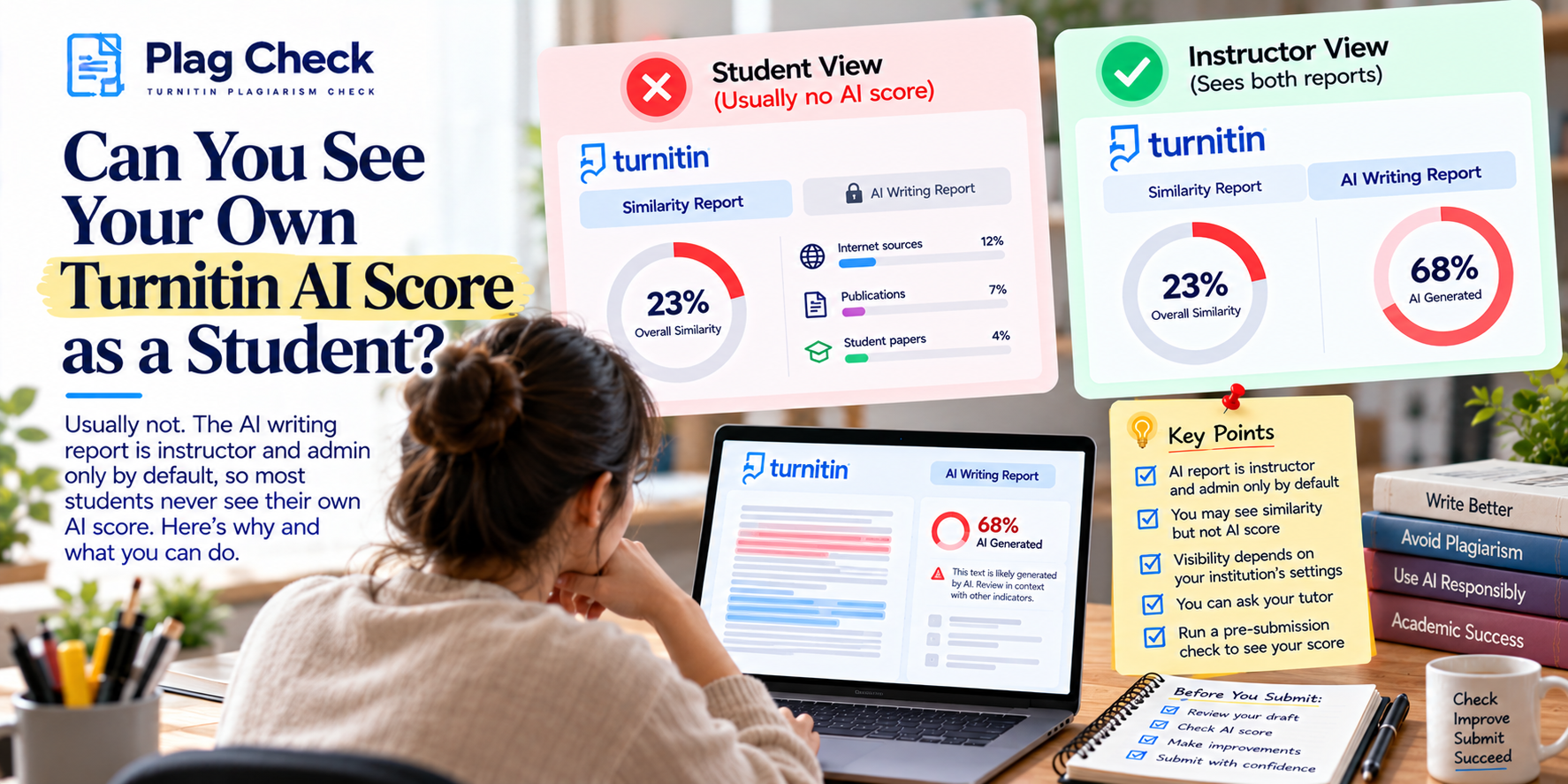
Example: submitting an essay bought from a website or generated by a chatbot. Similarity checks may find nothing because the text is new. Turnitin’s AI writing indicator may flag AI text, and tutors look for sudden changes in style and knowledge. See Turnitin AI detection explained.
How does Turnitin detect each type?
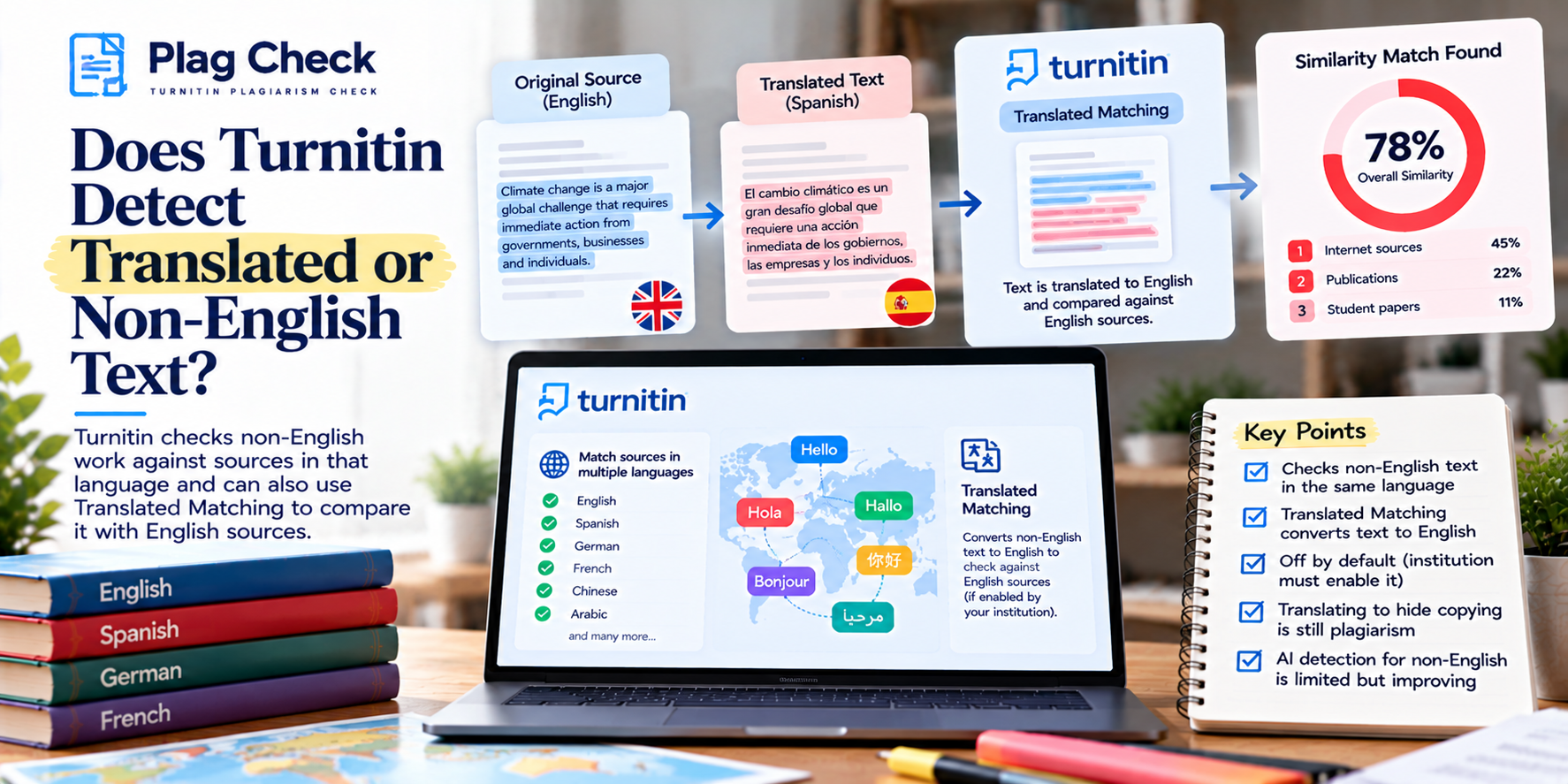
Turnitin’s similarity check finds text that matches its database, so it catches direct, mosaic and close paraphrasing well, and self-plagiarism when earlier work is stored. It cannot see uncredited ideas in new words. Its separate AI indicator looks for AI-generated prose, which covers some, but not all, outsourced work.
This is why a low similarity score does not prove originality and a high one does not prove plagiarism. Tutors combine the report with their own reading.
| Check your work for every type of match Get a full Turnitin similarity and AI report in about 15 minutes. No account needed. Check my document |
What are the penalties at university?
Penalties depend on the type, the amount, your level of study and whether it is a first offence. They range from advice and a mark reduction for minor accidental cases, to failing the assignment or module, and in serious or repeated cases suspension or expulsion. Dissertations are usually treated more strictly.
| Severity (typical, varies by university) | Possible outcome |
|---|---|
| Minor, first time, accidental | Warning, referencing support, mark reduced |
| Moderate | Assignment awarded zero or capped at a pass |
| Serious or repeated | Module failed, formal record |
| Contract cheating or major dissertation plagiarism | Suspension, expulsion or degree withheld |
Always check your own university’s academic integrity policy, as the categories and outcomes differ.
How can you avoid each type?
Record sources as you research, mark quotes immediately, paraphrase from memory not from the page, cite every borrowed idea, ask before reusing old work, follow your module’s AI policy and check your final version before you submit. Most plagiarism comes from rushed, disorganised writing.
- Use a reference manager to keep citations accurate.
- Keep quotes short and introduce them with your own words.
- Plan your argument before reading too closely, so sources support your points.
- Leave time for a final check 24 to 72 hours before the deadline.
- For dissertations, read our dissertation plagiarism check guide.
Is plagiarism the same as copyright infringement?
No. Plagiarism is an academic and ethical issue about credit. Copyright is a legal issue about permission to reuse protected work. You can plagiarise something out of copyright, and you can infringe copyright while citing correctly, for example by reproducing a whole book chapter.
In coursework, citation solves plagiarism. For large reproductions of images, tables or text in published work, you may also need permission.
How do tutors spot plagiarism Turnitin misses?
Tutors look for sudden changes in writing style, knowledge beyond the level taught, references that do not support the claims made, and arguments that mirror a well-known source. They may also ask you to discuss your work, which quickly shows whether you understand it.
This is why process evidence matters. Notes, drafts and version history show how your ideas developed, which protects you if questions are ever raised. It also means trying to beat the software is pointless: the human reading your work is part of the check.
What should you do if you think you plagiarised by accident?
If you have not submitted yet, fix it: add quotation marks and citations or rewrite the passage. If you have already submitted, contact your tutor promptly and explain. Universities usually treat honest, early disclosure of an accidental error more leniently than a problem discovered later.
Run a check on your final draft before submission so accidental errors are caught while you can still correct them. See how to check your Turnitin score before submitting.
Frequently asked questions
What is the most common type of plagiarism?
Accidental plagiarism from missing quotation marks or citations, and close paraphrasing, are among the most common in student work.
Can Turnitin detect paraphrasing?
It can detect close paraphrasing where wording and structure remain similar. Ideas rewritten in genuinely new words will not match, but still need a citation.
Is self-plagiarism really plagiarism?
Most universities treat reusing your own assessed work without permission as a breach of academic integrity.
Can Turnitin detect contract cheating?
Not through similarity if the text is new. Tutors rely on style changes, interviews and drafts, and Turnitin’s AI indicator may flag AI-generated text.
Is accidental plagiarism punished?
It can be, though penalties are usually lighter for first-time minor cases. Good citation habits prevent it.