It depends on your university’s policy and what you use AI for. Letting AI write the essay and submitting it as your own is misconduct almost everywhere. Using AI to brainstorm, explain a topic or check grammar is often allowed, sometimes only if you disclose it. Your institution’s policy decides, not a general opinion.
This is the question students most want a clean yes or no on, and the one that least deserves one. Universities are still working out where the line sits, and they have not all landed in the same place. A blanket answer would be wrong for half the people reading it. What you actually need is a way to tell which side of your institution’s line a given use falls on. That is what this guide gives you.
Why is there no single answer?
Two years ago most policies said little about AI. Now almost every university has a position, but those positions differ. Some allow AI as a study aid with no fuss. Some allow it only if you declare it. Some ban it for certain assessments and permit it for others. A few treat any generative AI use as misconduct unless a tutor says otherwise. So the same action, asking a chatbot to explain a concept, can be fine on one course and a breach on another. The policy, not the tool, is what decides.
When is using AI clearly cheating?
There is a bright line almost everyone agrees on. If AI produces the substance of the work, the argument, the analysis, the actual writing, and you hand it in as your own, that is passing off work you did not do. Academic integrity policies put this in the same family as contract cheating, and the penalties can be serious, as we set out in what happens if you get caught plagiarising at university. Trying to hide it by running AI text through a humaniser makes it worse, not better, and Turnitin’s bypasser detection is built to catch exactly that pattern.
When is it usually fine?
Using AI as a study aid is a different thing, and much of it is widely accepted. Uses many universities are relaxed about include:
- explaining a concept you are stuck on, in plainer terms than the textbook
- suggesting an essay structure, or questions you should be asking
- checking spelling, grammar and clarity on writing that is already your own
- summarising a long source so you can decide whether it is worth reading in full
- acting as a study partner to test your understanding of a topic
The common thread is that you are still doing the thinking and the writing. AI is helping you learn or tidy up, not producing the work you are assessed on. Even so, some institutions want these uses acknowledged, which is why disclosure matters.
What about the grey middle, like Grammarly and translators?
Between those two clear zones sits a wide grey band, and it is where real essays get written. Grammar assistants, translation apps, and the AI rewrite buttons now built into word processors all live here. Light grammar and spelling help is almost always fine. The trouble starts when a rewrite feature changes your wording wholesale, because at that point the sentences stop being yours and start reading as generated text, which can push up a Turnitin AI score even though you never opened a chatbot.
A simple test helps. If the tool is correcting work you wrote, you are usually safe. If the tool is writing, or heavily rewriting, you are drifting toward the wrong side of the line. When you are unsure whether a specific use is allowed, ask your tutor or check the policy before you rely on it, not after.
Why is disclosure your friend?
Many students assume admitting any AI use invites suspicion. In practice, where a policy asks for disclosure, a short note on how you used AI is protection, not confession. It shows you read the rules and stayed inside them. The students who get into trouble are rarely the ones who said “I used an AI tool to check my grammar”. They are the ones whose generated essay was flagged and who then had nothing to show for how it was written.
How does AI detection fit in?
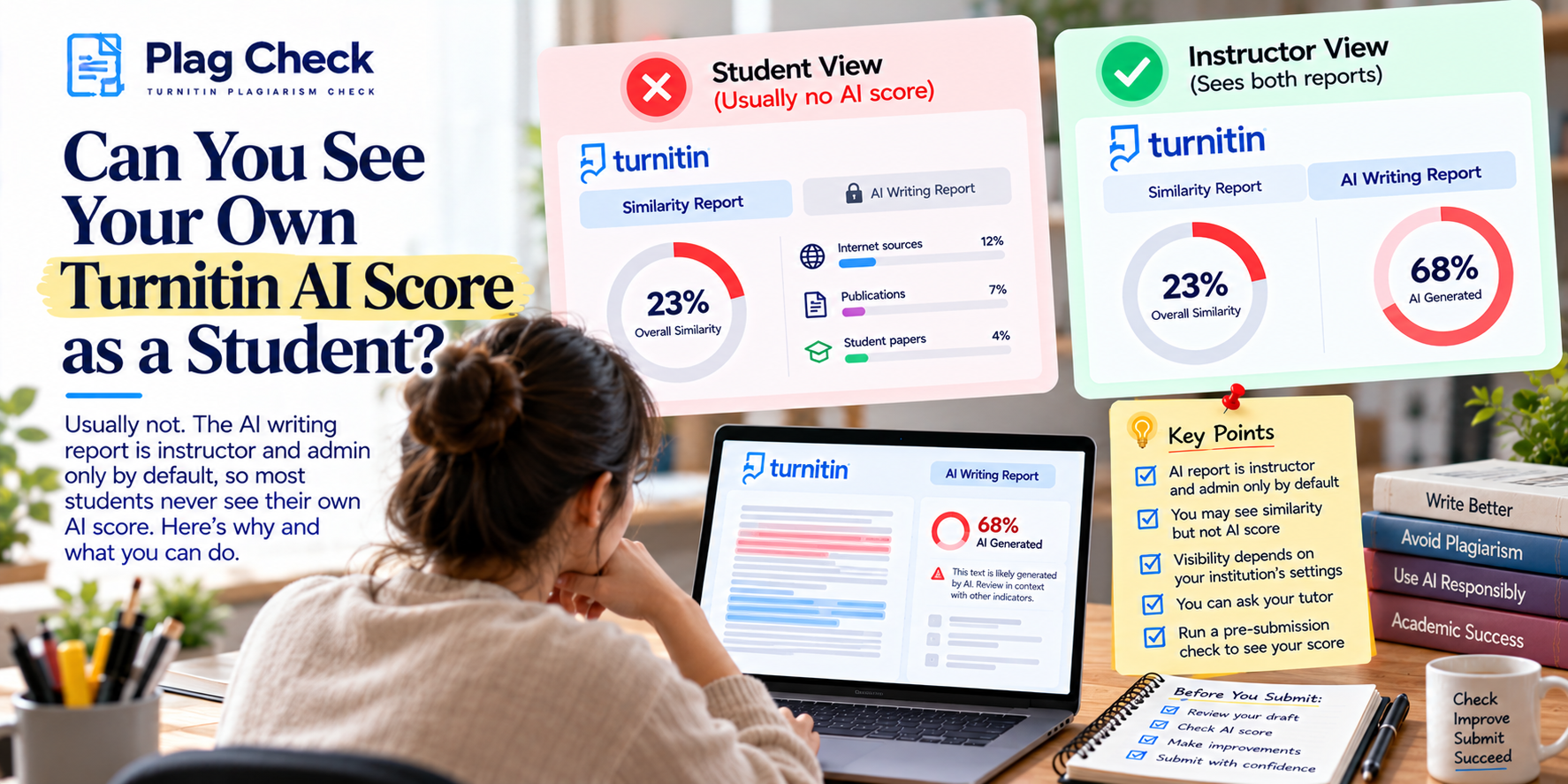
Turnitin’s AI writing indicator estimates how much of your prose looks machine-generated, and you can read how that detection works and how accurate it is for the full picture. Two things are worth being clear about. First, detection does not decide intent or guilt, your institution does. The score starts the conversation, a person finishes it, and it helps to know what AI score is actually acceptable. Second, because detectors produce false positives, your own evidence matters. If you used AI only for support, keeping your drafts, version history and notes lets you show the writing is yours if a score is ever questioned.
How do you stay on the right side of the line?
- Read your course’s AI policy before you use any tool, and follow it even when it is stricter than a friend’s course.
- Let AI help you think and tidy, never write the substance you are assessed on.
- Disclose AI use where your institution asks for it.
- Keep your drafts and notes, so you can always show your working.
- Check your draft before submitting, so an unexpected AI flag does not surprise you at the worst moment.
Frequently Ask Questions
Is using ChatGPT to write an essay cheating?
If you write the essay and you submit it as your own, yes, that is misconduct at almost every university. Using it to explain a topic or check grammar is usually treated very differently.
Is it cheating if I write the essay and only use AI to edit?
Light grammar and clarity help is usually acceptable. A full AI rewrite can cross into generated text and may raise your Turnitin AI score, so check your course policy first.
Do I have to tell my university I used AI?
Sometimes. Many institutions now ask you to disclose AI help, and some require it for specific assessments. Check your own AI or academic integrity policy.
Will Turnitin know I only used AI for support?
Turnitin only gives an AI percentage, it does not judge how you used a tool. Keeping your drafts and notes is how you show the work is yours if asked.
Is using Grammarly or a translator considered AI cheating?
Light grammar, spelling and translation help is usually fine, but aggressive AI rewrite features can change your wording enough to read as generated text. When in doubt, check the policy.