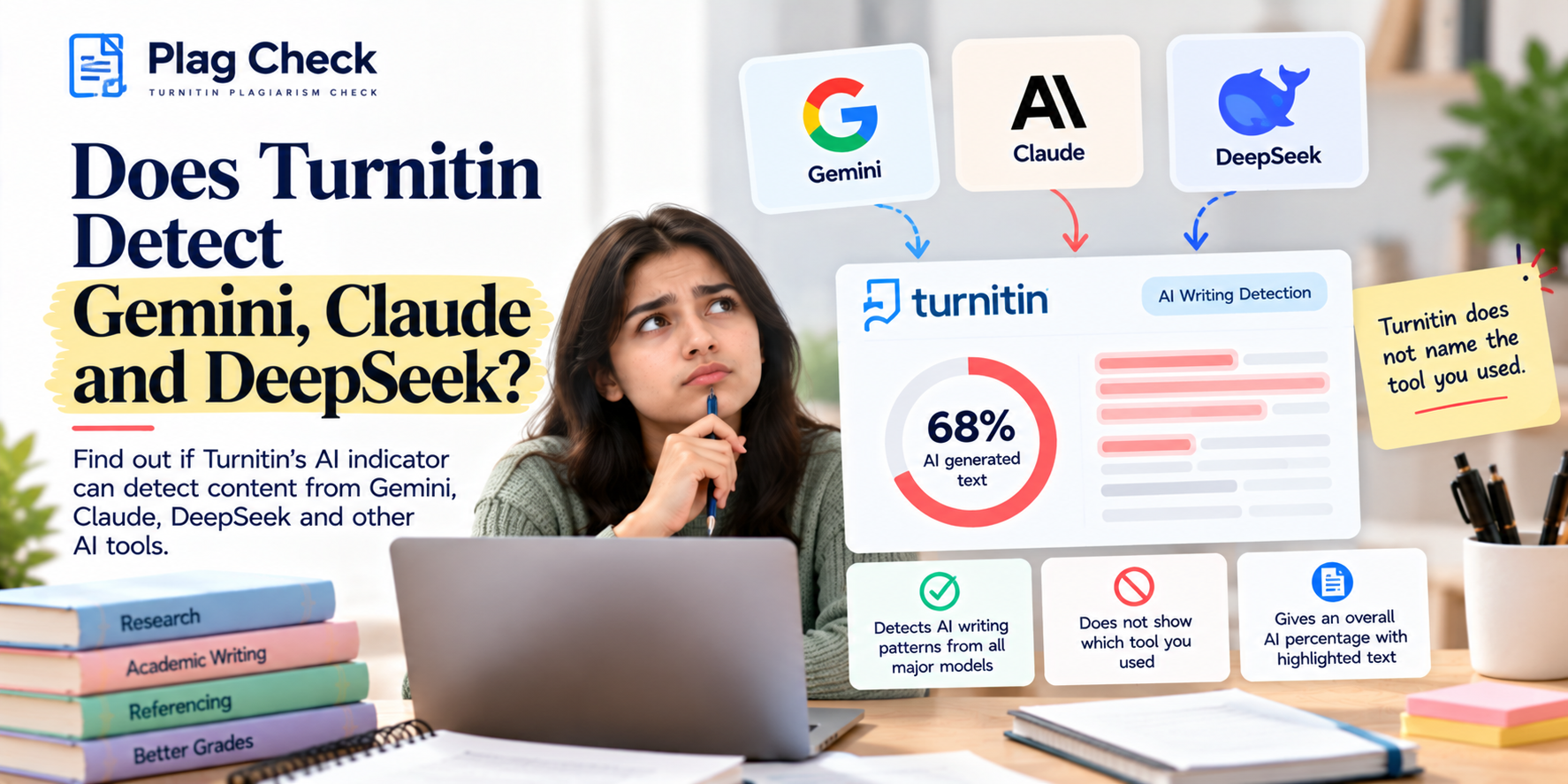
Turnitin, GPTZero and Originality.ai run different models on different data, so their AI scores on the same text rarely match, and none is proof on its own. If your university uses Turnitin, only the Turnitin result reflects what your tutor sees, so that is the score that affects your grade.
People line these three up hoping one of them is the real answer. The uncomfortable truth is that there is no single real answer, because each tool is measuring in its own way for its own audience. Once you know what each one is for, the comparison stops being confusing and starts being useful.
Why do the scores disagree?
An AI detector is only as good as the data it was trained on and the model it runs. Each of these three made different choices, so they weigh the signals of AI writing differently. A detector built mainly on marketing and web content reads an academic essay differently from one built on student work. It helps to understand how Turnitin’s own AI detection works before comparing it to anything else. The upshot is that the same paragraph can score low on one tool and high on another, and a clean result on a free checker tells you very little about what Turnitin will show your tutor. You are not getting a second opinion on the same exam, you are sitting three different exams.
What is each tool actually built for?
| Tool | Built for, and what that means for you |
|---|---|
| Turnitin | Universities and schools. Its AI indicator lives inside the Similarity Report tutors already open to mark work. It is not sold to individual students, and in most setups you cannot see your own AI score. This is the one that decides how your work is judged. |
| GPTZero | General consumers. It became popular on the back of a free tier, so it is widely used for quick self-checks and curiosity. Useful as a rough gauge, but not what most institutions grade against. |
| Originality.ai | Content teams, publishers and SEO agencies, on a pay-per-credit basis. It is strong for checking web content at scale. For a single marked assignment it is aimed at the wrong job. |
Read down that table and the pattern is clear. Only one of the three is the tool your marker uses. The other two are built for people who are not grading your essay.
How accurate are they, and what about false positives?
Every AI detector produces false positives, where human writing is scored as AI, and none is immune. Turnitin’s own stated position is that it aims to keep false positives under 1% on documents scored above 20% AI, and it treats lower scores as less reliable. GPTZero and Originality.ai publish their own claims on their own test sets. Read any of them the same way: a score is a prompt to look harder at the writing, not a judgement. If you want the detail on who gets wrongly flagged, we cover it in Turnitin AI false positives. Plain, formulaic or heavily edited human writing is the most likely to trip a false positive across all these tools, as is work by people writing in a second language.
Which result matters for your grade?
This is where the comparison resolves. If your institution uses Turnitin, that is the report your tutor opens, so it is the only score with any bearing on your mark. A spotless GPTZero result will not help you if the Turnitin AI indicator comes back high, because your tutor never sees the GPTZero number. It is also worth knowing what AI score is actually acceptable on Turnitin, so a figure in context does not panic you.
Where do Copyleaks and SafeAssign fit in?
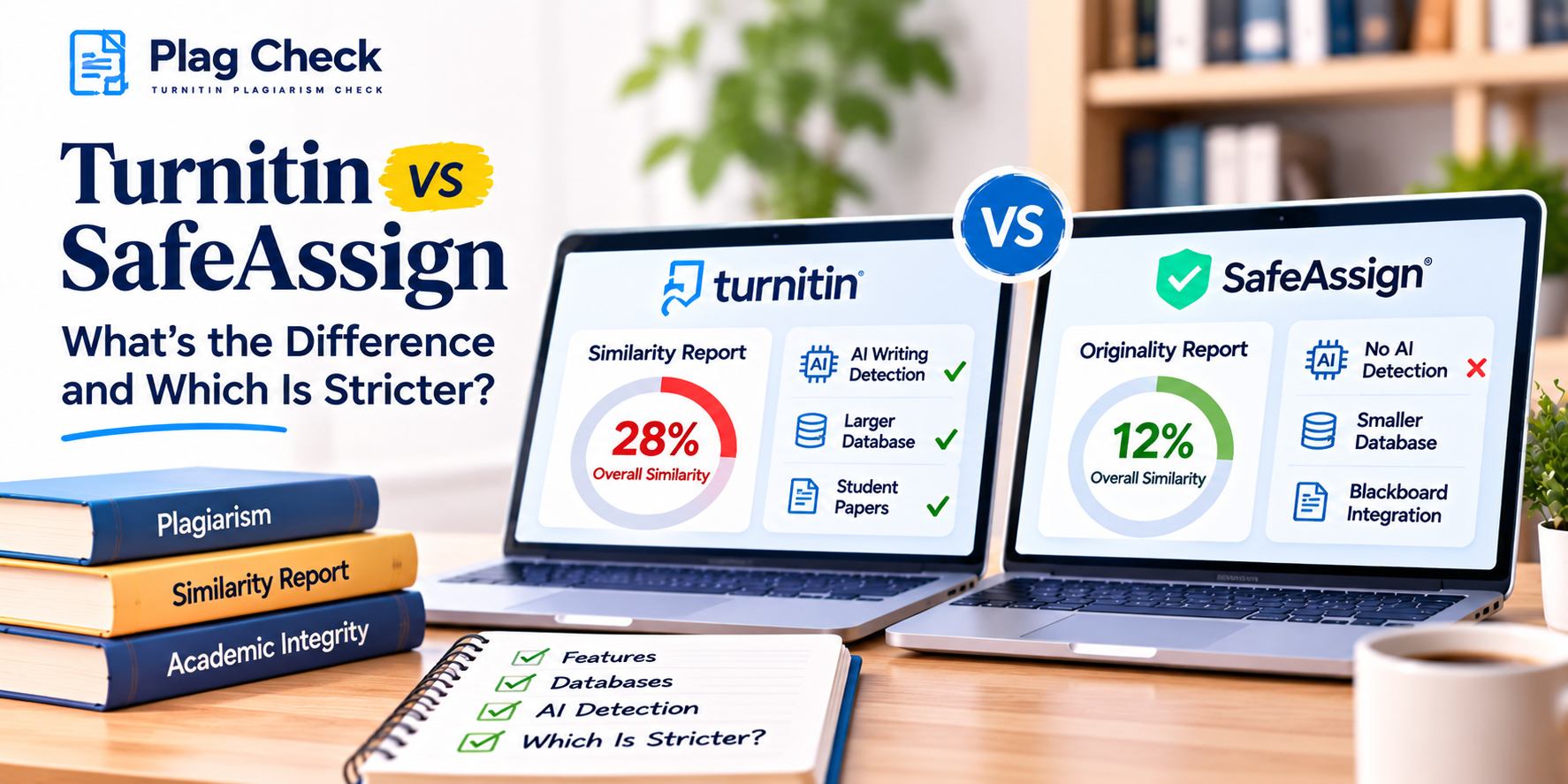
GPTZero and Originality.ai are the names that come up most, but they are not the only detectors. Copyleaks and SafeAssign also turn up in universities, and the same logic holds for all of them: each runs its own model on its own sources, so none of their scores predicts another. SafeAssign is built into some learning platforms and checks similarity in its own way, while Copyleaks markets both plagiarism and AI checking. The point is not which brand is cleverest. It is that only the tool your institution actually uses to judge your work is the one whose score affects you. If that tool is Turnitin, a Turnitin-based check is the one worth running before you submit.
How should you use a self-check?
- Treat any single score as a signal, then read the highlighted passages and judge them yourself.
- If you want a figure that reflects your grade, use a Turnitin-based check, not a consumer detector built for other work.
- Keep your drafts, notes and sources, so that if a score is ever questioned you can show how you wrote the piece.
- Do not try to game a number across tools. Writing in your own clear voice is what keeps every detector quiet.
If you are weighing plagiarism checkers rather than AI detectors, we compare the big three for students in Turnitin vs Grammarly vs Copyleaks.
How do you read a detector score without overreacting?
A single number is not a diagnosis, and treating it as one is how good work gets wrecked. When you see a score on any tool, read the highlighted passages first and ask whether they are genuinely yours. Check the length, because short pieces are scored far less reliably than long ones. Be extra sceptical of a flag if you write in a second language, since uniform phrasing trips these systems more often. And resist the urge to rewrite clean work purely to chase a lower number: it tends to make the writing worse, and aggressive rewriting can even raise the AI signal rather than lower it. The score is a prompt to check, not an instruction to panic.
Frequently Answer Questions
Is Turnitin or GPTZero more accurate?
They measure differently, so there is no single winner. For a marked assignment Turnitin is the one that counts, because it is what your tutor sees. GPTZero is a consumer tool best used for a rough self-check.
Why do Turnitin and GPTZero give different AI scores?
They run different models trained on different text, so they weigh the signs of AI writing differently. The same essay can score low on one and high on the other.
Does a low GPTZero or Originality.ai score mean Turnitin will pass me?
No. A clean result on one detector does not predict another. Only a Turnitin-based check reflects what your university actually sees.
Can I trust an AI detector score completely?
No. Every detector produces false positives. A score should prompt you to review the writing, never stand as proof on its own.
Which AI detector should a student use before submitting?
The one that matches your institution. If your university uses Turnitin, check against Turnitin rather than a general-purpose tool built for web content.